


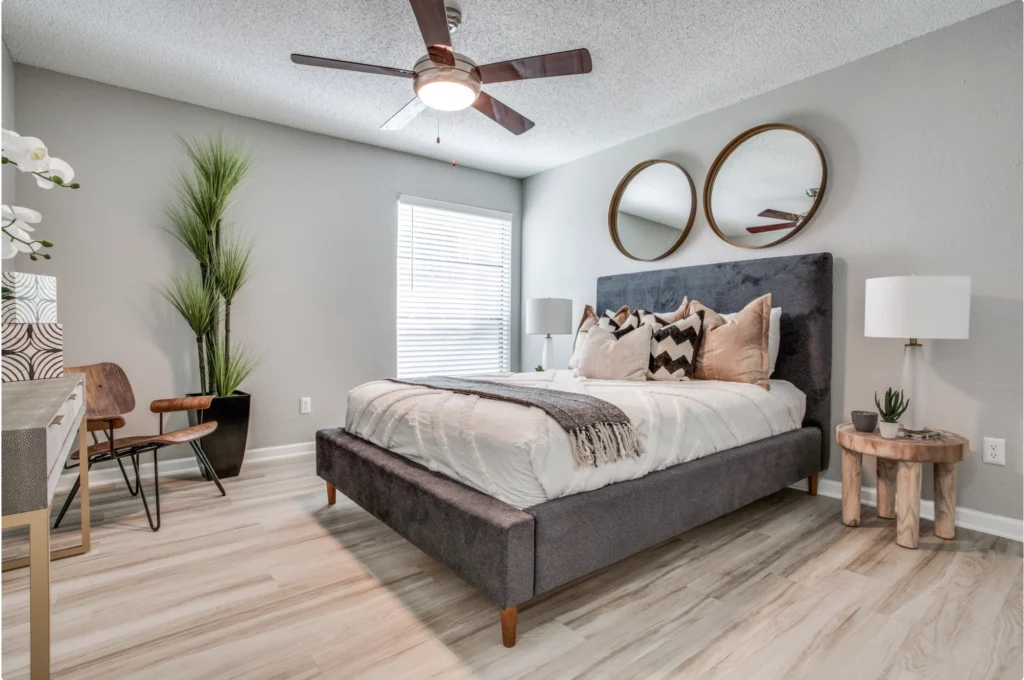
Create a Cozy Bedroom Retreat
Create a Cozy Bedroom Retreat with These Simple Tips (London edition)
If your bedroom currently feels like a “sleep-and-storage zone” (welcome to London life), you can still turn it into a calm little retreat without doing a full renovation. The trick is to fix the feel first (light, colour, clutter, softness), then spend money only where it actually changes your day-to-day.
Below is a designer-style plan you can copy this weekend.
Start with the 10-minute designer reset

Declutter like a stylist (not like you’re moving house)
Cozy doesn’t mean “lots of stuff.” Cozy means calm. So your first win is removing visual noise:
- Clear the bedside table(s) so you can actually put down a book and a glass of water.
- Hide cables (even a simple cable box instantly makes the room feel more grown-up).
- Put “floating clutter” into one lidded basket (chargers, creams, random bits).
Mini rule: If it doesn’t help you sleep or get dressed, it doesn’t need to live on display in your bedroom.
Fix the layout before buying anything
London bedrooms are often tight, so layout matters more than people think:
- Keep the path from door → wardrobe → bed clear.
- If possible, avoid having the bed stare directly at clutter (open shelving, laundry piles, etc.).
- Create a tiny “landing zone” (tray, bowl, or hook) so keys/coins don’t migrate onto the bed.
Pick a cosy colour palette that works with London light

Go warm and soft, not icy and grey
A bedroom can look cold fast in British daylight. My go-to palette for London homes:
- Warm white / creamy neutrals
- Soft greige (grey-beige)
- Muted sage or clay tones as accents (not necessarily full walls)
If you’re planning to sell or rent later, neutral shades usually photograph well and appeal to more people. Zoopla even notes that staging can help attract buyers, speed up a sale, and potentially achieve a higher price. (Zoopla)
Paint: the “it looks expensive” upgrade
Paint is one of the most powerful mood-changers. And the secret isn’t fancy colours—it’s the finish and prep:
- Fill and sand bumps
- Caulk gaps around skirting/architraves
- Paint woodwork cleanly
For budgeting: Checkatrade gives rough per-room painting guides (for example, around £450 for a medium room). (Checkatrade)
Lighting that makes the room feel cosy at 7pm

Lighting is everything. A bedroom can be beautifully decorated and still feel “meh” if the lighting is harsh.
Use the simple 3-layer lighting rule
- Ambient: the main ceiling light (but softened)
- Task: bedside reading light aimed downward (not into your face)
- Accent: warm glow (table lamp, wall light, subtle LED behind the headboard)
Add a dimmer (big impact, small job)
If you do one “grown-up” upgrade, do this. MyBuilder estimates dimmer installation typically £75–£200, depending on switch type and complexity. (MyBuilder)
Safety note: Electrical work must comply with Part P building regulations. The IET explains that work on fixed electrical installations in dwellings needs to comply with relevant standards (BS 7671 / wiring regs). (IET Wiring Regulations)
Swap your bulbs (cheap cozy)
Warm bulbs make your room feel instantly softer. Energy Saving Trust also points out LEDs are the most energy-efficient option and use significantly less electricity than halogens for the same light output. (Energy Saving Trust)
Bedding and textiles: the “cozy multiplier”
If you want the bedroom to feel like a retreat, you need softness and texture.
The easy “hotel bed” formula
- A smooth duvet cover (cotton or cotton-blend)
- Two sleeping pillows + two extra pillows (don’t overdo it)
- A throw at the foot of the bed for texture
Designer tip: Mix textures, not patterns. Think “knit + cotton + a little velvet,” rather than five different prints.
Curtains/blinds that actually help you sleep
Streetlights + early sunrise = not romantic. If your room isn’t dark enough, add blackout lining or blackout blinds.
For budgeting, Checkatrade suggests blind supply costs can range roughly £25–£132 per blind, and fitting is often £20–£30 on average. (Checkatrade)
Rugs and soft flooring for warmth and quiet
Textiles also help with noise. Thick curtains and rugs can reduce light and dampen sound. (Sleepstation)
Sound, temperature, and sleep cues (especially in the city)
This part is underrated—because it’s not “decor,” but it’s what makes a bedroom feel like a sanctuary.
Keep the bedroom cool
NHS advises creating the right sleep environment—cooler and well-ventilated tends to be better than hot or stuffy. (nhs.uk)
The Sleep Charity suggests an ideal bedroom temperature is around 16–18°C. (The Sleep Charity)
Reduce light and tech before bed
The NHS also encourages a sleep-friendly environment and minimizing bright light from screens before bedtime. (Sandwell and West Birmingham NHS Trust)
Storage that looks intentional (and feels calming)
“Closed storage” is the cozy secret
Open shelves can look great in magazines, but in real homes they often look busy. If you’re trying to feel calm:
- Choose bedside storage with drawers/doors
- Use lidded baskets
- Store “daily chaos” (chargers, receipts, meds) out of sight
Fitted wardrobes: the calmest upgrade for London bedrooms
If your room has awkward corners, alcoves, or chimney breasts, built-in storage can be a game-changer.
- Checkatrade estimates the average price for a 2-section custom-built fitted wardrobe is about £3,400. (Checkatrade)
- Which? publishes a 2026 fitted wardrobe cost guide based on quotes, brands, and surveys of owners. (Which?)
What it costs: realistic budget guide for a cosy bedroom refresh
Here are common upgrades and ballpark budgets (UK-wide guides—London can run higher depending on access, timing, and finish level).
| Upgrade | Typical spend | Source |
|---|---|---|
| Professional painting (medium room guide) | ~£450 | (Checkatrade) |
| Dimmer switch installation | £75–£200 | (MyBuilder) |
| Blinds: supply (per blind) | £25–£132 | (Checkatrade) |
| Blinds: fitting (per blind) | £20–£30 | (Checkatrade) |
| Carpet a room (average) | ~£400 | (MyJobQuote) |
| Fitted wardrobe (2-section average) | ~£3,400 | (Checkatrade) |
The three budget routes (pick one)
- £0–£150: “Weekend cosy”
Declutter + warm bulbs + simple bedding refresh + one lamp or throw. - £150–£1,000: “You’ll feel it immediately”
Paint refresh + better curtains/blinds + layered lighting + a large rug. - £1,000–£5,000+: “Investment upgrade”
Flooring + fitted storage + lighting plan.
“Customer experience” style examples (composite, London-typical)
I’m going to keep this honest: these are composite examples based on common London bedroom projects and the kind of feedback homeowners report—so you get realistic scenarios without me inventing specific individuals.
Composite story 1: The “small flat, big calm” upgrade
A couple in a one-bed flat didn’t change furniture at all. They:
- repainted to a warm off-white
- swapped to warm LEDs
- added blackout lining and a rug
Their takeaway: the room felt quieter and more restful, and they stopped scrolling in bed because the lighting felt “wind-down” instead of “office.” The result wasn’t expensive—it was mostly mood and sleep cues (cool, dark, calm). (nhs.uk)
Composite story 2: Selling soon—make it feel bigger
A homeowner prepping for viewings focused on presentation:
- decluttered hard
- used neutral paint
- improved lighting
This lines up with mainstream selling advice: a fresh neutral backdrop is often recommended to appeal to more buyers. (The Standard)
Did it “add value”? Nobody can promise a number, but the goal is to attract more interest and stronger offers—Zoopla explicitly notes staging can help you get a higher price. (Zoopla)
Composite story 3: The storage fix that changed daily life
A family with a box-room bedroom added built-in storage because the clutter was constant. The room suddenly felt “finished” because everything had a place—especially laundry and seasonal items. Even without changing décor, removing visual mess created the cozy feeling.
Tips that can add value (without turning your bedroom into a showhome)
Keep big decisions neutral
Walls, flooring, and fitted furniture are expensive to reverse. Neutral choices tend to be safer for resale and photos. (The Standard)
Make lighting flexible
Dimmers + layered lighting make the room feel premium. This is exactly the kind of “small upgrade, big feel” that helps in viewings and day-to-day living. (MyBuilder)
Add storage that looks built-in (even if it isn’t)
If fitted wardrobes aren’t in budget, you can still create a “built-in look” with:
- wardrobes with matching doors/handles
- consistent baskets/boxes
- a single colour palette across storage
Pros and Cons (quick reality check)
Pros
- Big comfort change without major building work
- Better sleep cues (cool, dark, calm environment) (nhs.uk)
- Paint + lighting upgrades can feel “high end” for relatively modest spend (Checkatrade)
- Better presentation if you sell or rent later (Zoopla)
Cons
- Costs creep when you try to do everything at once
- Over-styling can become clutter (cozy becomes busy)
- Electrical changes should be done safely and to regs (IET Wiring Regulations)
FAQ
What’s the fastest way to make my bedroom feel cosy?
Declutter visible surfaces + warm bulbs + one soft throw + bedside lamp. It’s the quickest “mood shift.”
How do I make my bedroom darker for better sleep in London?
Blackout lining/blackout blinds, and reduce light leaks around curtains. Blinds supply and fitting costs vary, but typical fitting is often quoted per blind. (Checkatrade)
Are fitted wardrobes worth it?
If you’re battling clutter or awkward room geometry, yes—because they reduce visual mess and maximise usable storage. Cost varies widely, but UK cost guides put many installs in the few-thousand-pound range. (Checkatrade)
What temperature should I aim for at night?
Many sleep resources recommend a cooler room; The Sleep Charity suggests around 16–18°C. (The Sleep Charity)
Will making my bedroom cosy add property value?
No one can guarantee a number, but staging/presentation can help attract buyers, speed up a sale, and potentially achieve a higher price. (Zoopla) Neutral paint and “freshen up” advice is also commonly recommended for selling prep. (The Standard)
A simple 7-day plan (if you want structure)
- Day 1: Declutter + cable tidy
- Day 2: Layout tweaks + measure for curtains/blinds
- Day 3: Pick palette + order paint testers
- Day 4: Paint prep (fill/sand/caulk)
- Day 5: Paint
- Day 6: Lighting tweaks (bulbs + lamps + dimmer quote)
- Day 7: Bedding layers + final styling (one tray, one plant, one scent)