


Small Kitchen Design Tips for London Homes
Intro – Small kitchen design tips

If your kitchen is tiny (or just feels tiny), you’re not alone — London homes are full of narrow galleys, awkward corners, chimney breasts, and “why is the boiler there?” moments. The good news: small kitchens can be some of the most satisfying transformations, because smart layout + storage usually beats “more space”.
In this guide, we explore effective small kitchen design strategies to maximise your space.
Top Small Kitchen Design Ideas
The quick designer audit (do this before you plan anything)
When considering small kitchen design, focus on the best layout that suits your needs.
Before you fall in love with a Pinterest kitchen, do a 20-minute reality check:
Measure the stuff that steals space
- Door swings (including appliance doors)
- Windows (and if they open inward)
- Radiators, boilers, fuse boxes, meter cupboards
- Chimney breasts and bulkheads
Decide your upgrade level
- Refresh: paint, handles, lighting, storage tweaks
- Refit: new units/worktops/appliances (same layout)
- Replan: layout changes + plumbing/electrics (highest impact, most planning)
Pick your “non-negotiables”
Dishwasher? Full-height fridge? Proper pantry? Seating? Laundry? A bin system that doesn’t drive you mad? Decide early — small kitchens don’t forgive indecision.
Layouts that work best in small kitchens

You don’t need a perfect “kitchen triangle” in London — you need zones that make sense.
Galley kitchens (London classic)



Best for narrow rooms in terraces and many flats. The trick is keeping it streamlined:
- Put the sink and hob on the same run if width is tight (reduces cross-traffic).
- Keep the main prep zone between sink and hob.
- Use tall storage at one end, not scattered everywhere (it feels calmer).
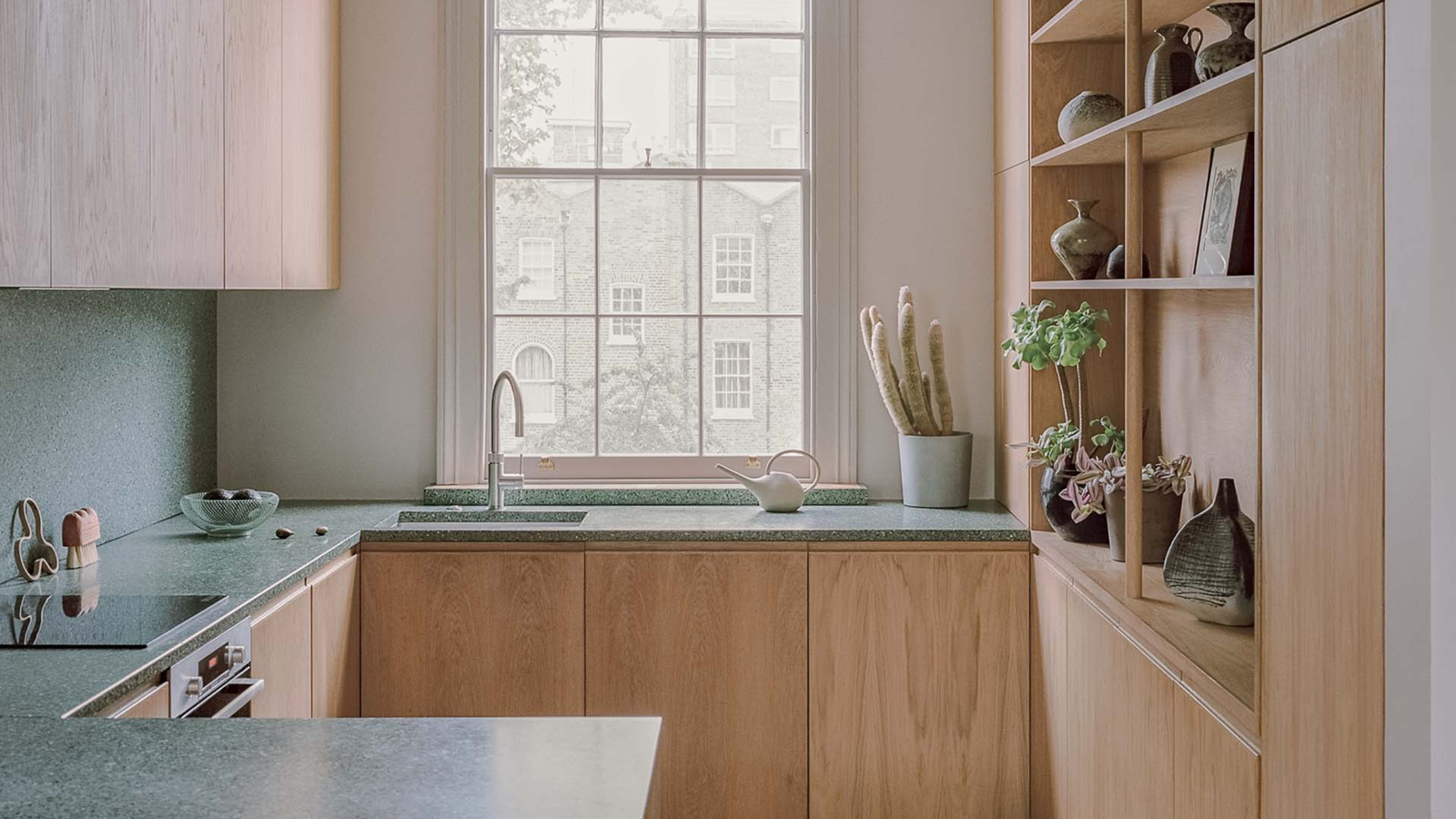
Incorporate plants in your small kitchen design for a fresh and inviting atmosphere.
L-shaped kitchens


Effective small kitchen design can transform your cooking space into a functional masterpiece.
Perfect when you have a corner and want one open walkway.
Big win: you can create a clear prep zone and keep the kitchen from feeling like a corridor.
One-wall kitchens (studios + compact flats)

This is where tall storage and appliance choice matter most:
- Go for a tall pantry + integrated fridge feel
- Use compact appliances so your prep space isn’t sacrificed
Mini U-shape (only when it truly fits)

U-shapes can be brilliant for storage/worktop space — but only if you avoid door collisions and narrow walkways.
Storage that “creates space” (without adding square metres)

Most small kitchens don’t need more cupboards… they need better cupboards.
Go vertical (and stop at the ceiling)
- Full-height cabinets use the room’s full volume
- Bridging units over fridges add serious storage
- No dusty dead zone above wall units
Corners: don’t waste them
A proper corner system (pull-out corner, swing-out, LeMans-style shelving) can turn “awkward space” into prime storage.
Pull-outs beat shelves (in small kitchens)

- Slim pull-out larders (even 150–300mm) for oils, spices, tins
- Internal drawers inside cabinets (easy access, less rummaging)
A simple rule that makes kitchens feel bigger

Clear worktops = big-kitchen vibe.
A few upgrades help:
- Built-in bin system
- Wall rail for utensils
- Magnetic knife strip
- “Appliance garage” for toaster/coffee bits (if you can)
Light, colour, and finishes that make a kitchen feel larger
Choosing the right appliances is crucial in small kitchen design for space management.
Small kitchens can feel expensive and spacious if the surfaces are doing some heavy lifting.
Reflective materials (used carefully)
A glossy/reflective splashback or light-reflective finish can bounce light around a compact room.
Colour: you don’t have to go all-white
- Pale colours help with brightness and continuity
- Dark tones can add depth and look luxe (as long as lighting is layered)
Keep the visual “breaks” minimal
Lots of contrasting finishes can chop a small kitchen into pieces visually. Fewer materials, calmer look, bigger feel.
Appliances and fixtures that save space in real life
Pick appliances that protect prep space
- Compact dishwasher (45cm) can be worth it in flats
- Multi-function ovens reduce the need for separate appliances
- Don’t oversize the sink if it steals your main prep zone
Ventilation matters more than people think
A strong extractor keeps the space feeling fresh — especially in open-plan flats.
Costs and value: what London homeowners should expect
Kitchen pricing is all over the place depending on spec and whether you move services — but for context, Houzz reports median kitchen renovation spending rising to £17,500 (UK) and a major small kitchen renovation median around £4,900. (Houzz)
Can a new kitchen add value?
Often yes — especially if the old kitchen is visibly dated or poorly planned. Some property-focused sources suggest a well-executed renovation can increase value by up to ~15% (highly dependent on area and finish). (sothebysrealty.co.uk)
For layout-led improvements, HomeOwners Alliance research has cited significant gains from creating open-plan kitchen/dining in London (their example figures are large and will vary a lot by property). (HomeOwners Alliance)
Important reality check: value uplift isn’t guaranteed. It depends on the local market, your finish level, and whether your kitchen was holding the home back.
Home-type tips that add value (London-specific)
Below are the “what works” strategies I use constantly, based on how these property types are built — and what buyers/tenants tend to respond to.
Customer experiences note: These are typical client stories (composite examples) drawn from common London scenarios — not claims about one specific address. They’re here to show how decisions play out in real homes.
Flats / Apartments: make it feel built-in and calm

What usually adds the most value
- One-wall or compact L-shape with tall storage
- Integrated appliances (or at least “integrated look” panels)
- Strong lighting plan (under-cabinet + ceiling + warm task lights)
A typical client win
A couple in a Zone 2 flat had a narrow one-wall kitchen that felt messy all the time. We switched to tall pantry storage, added a compact dishwasher, and built a proper bin drawer. The kitchen didn’t get bigger — but it felt bigger because the worktop stayed clear. When they later refinanced, the broker feedback was basically: “this looks like a higher-end flat now” (not a formal valuation uplift, but it changed buyer/valuer perception).
Consider colour schemes that enhance the feeling of space in small kitchen design.
Terraced Houses (Row Houses): perfect the galley

Terraced homes often have a long, narrow kitchen — and that layout can be amazing when it’s planned properly.
Value-adding moves
- Keep a continuous run for prep (avoid breaking it with random tall units)
- Add a slim pull-out pantry
- Consider widening the rear opening to improve light (where feasible)
If you’re thinking of a bigger change
Side-return extensions are popular for Victorian/Edwardian terraces because they turn that wasted alley into kitchen space — and some sources suggest they can add significant value in London (figures vary widely). (designteam.co.uk)
A typical client win
A family in a terrace kept the galley footprint (no extension), but we re-zoned it: prep zone, cooking zone, and a tall “utility wall.” Their feedback: “we cook more now because the kitchen stopped feeling like a hallway.” That kind of usability improvement is what buyers notice instantly on viewings.
Semi-Detached Houses: make it family-functional
Semis often have more flexibility than terraces — and that’s your advantage.
Value-adding moves
- Create a pantry/utility zone (even a tall cabinet wall)
- Improve flow between kitchen and dining
- If you open up, make sure ventilation and lighting are handled well (otherwise it feels like a noisy cooking corner)
Small kitchen design can benefit from the right mix of textures to create visual interest.
Detached Houses: design for daily living, not just looks
Detached homes can handle more storage and larger appliances — but the risk is a kitchen that feels oversized and impractical.
Value-adding moves
- Proper pantry (walk-in or tall cabinet version)
- Big fridge/freezer only if storage supports it
- Keep the main prep zone generous — buyers love “it looks usable”
Mews Houses: hide the kitchen, keep the character
Mews homes are compact and design-led. Buyers often want beautiful and discreet.
Value-adding moves
- Concealed storage (appliance garage, pocket doors)
- Clean lines, integrated look
- Lighting that softens the space (mews can be darker)
Georgian homes: respect proportion and heritage

Georgian properties often have elegance baked in — don’t fight it.
Value-adding moves
- Shaker or classic doors that suit the architecture
- Keep symmetry where possible
- If you’re in a listed building or conservation area, expect extra constraints (plan early)
Victorian homes: work with the chimney breast and narrow footprints
Victorian kitchens often have quirks that can either ruin a layout… or become the smartest part of it.
Value-adding moves
- Use chimney breast walls for tall storage or open shelving (controlled!)
- Keep cabinets aligned and tidy — Victorian rooms can feel busy fast
- If extending, side-return strategies are common for this stock (Multiply.build)
A typical client win (with value angle)
A Victorian terrace kitchen was dark and cramped. We didn’t extend — we just improved light (reflective splashback + better lighting) and storage engineering. When they sold later, the agent feedback was that the kitchen “presented like a turnkey home,” and that’s exactly the emotional driver that helps offers (not a guaranteed % uplift, but it reduces buyer objections). Renovation-to-value stories often point to kitchens as a key lever. (sothebysrealty.co.uk)
Edwardian homes: similar opportunities, often slightly more width

Edwardian stock can offer a touch more breathing room than Victorian.
Value-adding moves
- Consider L-shape + tall wall if width allows
- Make the dining connection feel intentional (not accidental)
- Daylight strategy: roof glazing (if extending) or strong layered lighting if not
1930s Semi: a “replan” can transform the whole home
1930s semis often have kitchens that feel separated from the rest of the house — and buyers love when that’s solved well.
Value-adding moves
Multipurpose furniture is key in small kitchen design to maximise usability.
- Create a family hub: open up carefully, keep a practical layout
- Pantry/utility solutions are huge for family buyers
- If you create open-plan kitchen/diner, research from HomeOwners Alliance has highlighted this as a strong value-adding change (their published example uses big London numbers, so treat as indicative, not a promise). (HomeOwners Alliance)
Modern & Contemporary: keep it sleek, but don’t lose warmth
Modern homes sell on clean lines — but the kitchen still needs to feel livable.
Value-adding moves
- Integrated appliances + clutter-free storage
- Handleless can work brilliantly — as long as it’s easy to maintain
- Add warmth with texture (wood accents, matte finishes, good lighting)
Budget and price guide (London averages)
Average cost table (London-focused)
Ranges vary by specification, access, and how much you move plumbing/electrics. These are “planning numbers” to help readers scope options.
| Scope (Small Kitchen) | Typical London Range | Best for | Notes |
|---|---|---|---|
| Cosmetic refresh (paint, handles, lighting tweaks, minor storage) | £500–£3,000 | quick uplift / sale prep | varies hugely by DIY vs pro |
| Budget renovation (basic units + laminate, minimal layout change) | £10,000–£15,000 | rentals / starter homes | London budget tiers (Arch KBB) |
| High-quality small kitchen renovation (<10m²) | £12,000–£20,000 | most London flats/terraces | space-saving integration often pushes spec (Better Homes) |
| Mid-range renovation | £20,000–£35,000 | long-term homes | common London mid-range (Arch KBB) |
| High-end bespoke | £40,000–£75,000+ | design-led / premium | full custom, premium finishes (Arch KBB) |
| Installation (labour only) | ~£2,000–£6,000 (avg ~£3,500) | any refit | labour-only fitting averages (Checkatrade) |
| Kitchen design fee (if paid separately) | £770–£4,600 | complex layouts | can be % of project (Checkatrade) |
“Where to spend vs save” in a small kitchen
- Spend: storage engineering, lighting plan, durable worktops, good extractor
- Save: standard carcasses, simple door styles, handle choices, strategic “hero” feature
Pros and cons of redesigning a small kitchen
Pros
- Big improvement in daily life (flow + storage)
- Can make a home feel more “premium” without adding floor area
- Kitchens are a major buyer focus; good ones reduce negotiation friction (sothebysrealty.co.uk)
Cons
- Mistakes are amplified in small spaces (door clashes, no prep zone)
- Storage engineering can increase cost
- Moving plumbing/electrics can snowball quickly
Quick FAQ (London edition)
What’s the best layout for a small London kitchen?
Most often: galley or L-shape, planned around zones and clearances.
Will a new kitchen add value?
Often, yes — especially if the current kitchen dates the home. Some sources cite potential uplifts up to ~15%, but it varies hugely by property and finish. (sothebysrealty.co.uk)
What’s the “biggest win” for a small kitchen?
Storage engineering + lighting. A kitchen that stays tidy looks bigger and more expensive.
Is a side return extension worth it?
It can be, particularly for terraces where it unlocks space and light. Some sources suggest meaningful value increases in London, but numbers vary and depend on build cost and area. (designteam.co.uk) Small kitchen design highlights include innovative storage solutions for efficiency. Embrace open shelving as a small kitchen design trend for both style and function.

Comments (4)
[…] you’re not alone. Most small kitchens don’t actually need more square footage — they need better layout decisions, smarter storage access, and lighting that makes the space feel […]
[…] for: flats, modern builds, small galleys, open-plan […]
[…] This guide is a shortcut. You’ll do a quick quiz, decode the most common kitchen styles (in plain English), match them to your home type, and get realistic cost + value tips. […]
[…] (small London kitchens, I’m looking at you) islands can also become the thing you trip over, the place where stools […]
Comments are closed.