


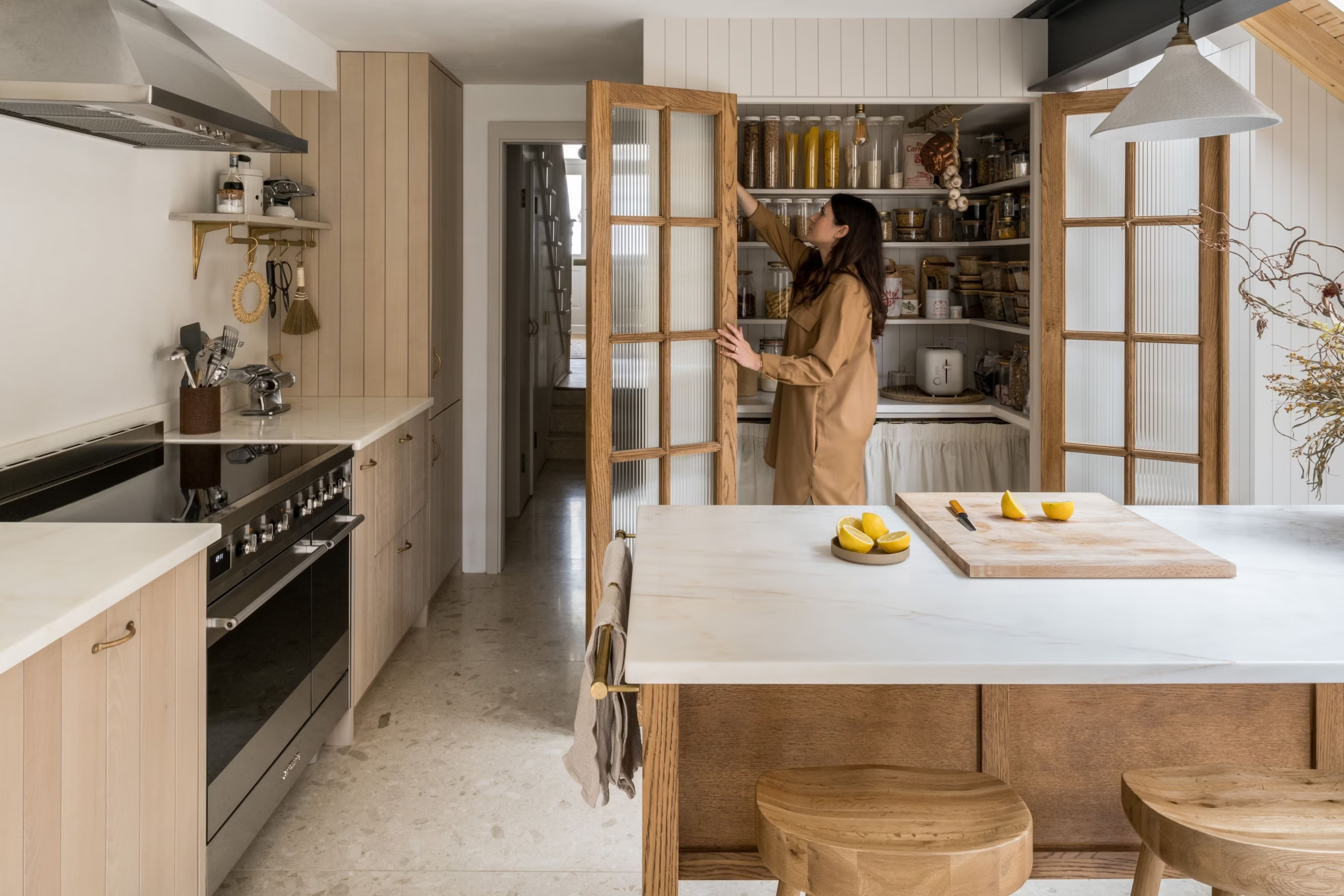
How to Create a Sustainable Kitchen on a Budget (London Homeowners’ Guide)
Sustainable Kitchen Renovation on a Budget
A “sustainable kitchen” doesn’t have to mean a £35k+ rip-out and a showroom full of shiny stuff. In most London homes, the most sustainable (and budget-friendly) kitchen is the one where you keep the layout, reuse what’s still solid, and then upgrade the few things that cut bills + waste the most.
This guide walks you through exactly that—step by step—with realistic London price bands, plus a few real homeowner-style stories (and what happened to value).
What “sustainable” actually means in a kitchen
In plain English, a sustainable kitchen is one that:
- Uses less energy and water (appliances, lighting, taps)
- Creates less waste (food waste + renovation waste)
- Lasts longer (durable materials you won’t replace in 2 years)
- Is healthier indoors (lower VOC paints/finishes)
Also: don’t get tripped up by appliance labels. The UK moved back to an A–G energy label scale (instead of A+++), with the first big rescale phase in March 2021. (GOV.UK)
Step 1: Do a 30-minute “Keep / Upgrade / Replace” audit

Before you buy anything, walk your kitchen with a notebook:
Keep (if it’s structurally sound)
- Cabinet boxes/carcasses that aren’t swollen, crumbling, or warped
- Worktop runs that are fine (even if ugly)
- Sink + plumbing positions (moving these is a fast way to blow a budget)
- Layout that works day-to-day
Upgrade (high impact, low disruption)
- Cabinet doors/handles (big visual change)
- Lighting (especially under-cabinet)
- Tap aerator / water-efficient tap insert
- One or two “workhorse” appliances (fridge/freezer, dishwasher)
Replace (only if it’s truly done)
- Damaged carcasses or mouldy panels
- Very worn flooring with lifting edges/water damage
- Poor extraction (recirculating that doesn’t actually do much)
London tip: Keeping your existing layout is one of the biggest cost-savers—because trades and changes to plumbing/electrics are what usually inflate totals.
Step 2: Pick your budget lane (what you get at each level)

London pricing varies a lot by access, property type, and whether you’re changing layout, but these tiers are a useful planning baseline:
| Project type | Typical London budget | What it usually includes |
|---|---|---|
| Eco Refresh | ~£1,000–£6,000 | Paint/respray or DIY refresh, new handles, lighting upgrades, tap aerator, small repairs |
| Partial Sustainable Upgrade | ~£6,000–£15,000 | New doors (reuse boxes), new worktop/splashback, better lighting, selective appliance upgrades |
| Full Refit (same footprint) | ~£10,000–£35,000 | New cabinetry/worktops/appliances/finishes; costs rise if you move services |
| High-end bespoke | £40,000–£75,000+ | Custom everything + premium appliances/materials |
Those “£10k–£15k budget / £20k–£35k mid-range / £40k+ high-end” bands are widely echoed in London-focused cost guides. (Arch KBB)
A very practical rule of thumb: Which? advises that a kitchen renovation should typically cost no more than 5–10% of your home’s value, and to add a contingency (they mention at least 15%) for surprises. (Which?)
The biggest sustainability wins per pound
1) Keep the cabinet boxes—change only what you see
If your carcasses are solid, refacing is the budget hero:
- Replace doors
- Update handles/hinges
- Add internal organisers
- Refresh end panels/trim if needed
Which? explicitly calls out saving money by keeping cabinets and only replacing doors. (Which?)
And UK refacing companies also highlight the waste reduction angle (less landfill vs full replacement). (Dream Doors)
Quick “is refacing suitable?” check
- ✅ Doors hang straight, boxes aren’t swollen, no persistent damp
- ❌ Carcasses are soft/swollen near sink, mould issues, or layout is genuinely unusable
2) Upgrade lighting (it’s a value trick and an energy one)

If you want the kitchen to feel “expensive” without spending expensive money, lighting is the cheat code:
- Bright, glare-free task light where you prep food
- Warm ambient lighting for evenings
- Under-cabinet strips to eliminate shadows
It’s also a sustainability play: less energy than old halogens/incandescents, and you’ll use the kitchen more comfortably.
3) Add a tap aerator (tiny upgrade, surprisingly real savings)
Older taps can run around 15 litres/min, and an aerator can bring that down to ~6 litres/min while still feeling “normal” because it mixes air into the stream. (Save Water Save Money)
Save Water Save Money also notes estimates like up to 1,274 litres/month saved (depending on usage). (Save Water Save Money)
This is one of the rare upgrades that is:
- cheap,
- DIY-friendly,
- instantly measurable.
4) Appliances: replace only the “workhorses,” and shop the label correctly

If your budget is tight, don’t replace everything at once. Prioritise:
- Fridge/freezer (always on)
- Dishwasher (if you have one and use it often)
- Washer/dryer if it’s in-kitchen and heavily used
AMDEA (the UK appliance manufacturers’ association) notes older appliances are typically far less efficient and can cost more to run; they even cite a test where replacing a 20-year-old fridge freezer with a modestly efficient model saved around £100/year in energy costs. (amdea.org.uk)
And remember: the UK rescaled energy labels to A–G, so an old “A+++” doesn’t translate the way people assume. (GOV.UK)
Bonus sustainability win: AMDEA also points out Ecodesign requirements like eco-settings and improved expectations around spare parts/repair info for certain appliances—helpful if you’re trying to buy items that last. (amdea.org.uk)
5) Reduce food waste with a smarter layout (this is underrated)

Sustainability isn’t just materials—it’s habits the kitchen design enables.
WRAP’s Love Food Hate Waste campaign says a large share of UK food waste happens at home—citing 4.7 million tonnes of food thrown away per year that could have been eaten, and that a majority of waste is from citizens in their own homes. (wrap.ngo)
Simple “design moves” that reduce waste:
- A dedicated “Eat Me First” shelf/box
- Clear containers (so food isn’t forgotten)
- A proper dry-goods zone (so you don’t double-buy)
- A freezer zone for leftovers (label + date)
Sustainable materials that still look designer (without going luxury)
Worktops (pick durability + repairability)
Budget-friendly approach: if money is tight, replace the main run (the one you see most) and keep the rest.
Popular “greener-leaning” options in London projects include:
- Bamboo (renewable plant-based material; widely used for worktops) (worktop-express.co.uk)
- Recycled glass surfaces (often made using recycled glass content; visually distinctive) (HiF Kitchens)
- Laminate can still be a smart budget choice if you buy decent quality and avoid constant replacement—because longevity is a big part of sustainability.
Timber and cabinetry: look for credible certification
If you’re buying new timber products, FSC UK explains that FSC certification helps consumers choose materials from well-managed forests and/or recycled sources, and that without credible certification it’s hard to verify sourcing claims. (uk.fsc.org)
Small reality check: there have been recent concerns in the market about mislabelled timber origin even under major certification schemes, so it’s worth buying from reputable suppliers and asking for documentation when possible. (The Guardian)
Flooring (only if you need to replace it)
If your floor is staying, don’t rip it out “for sustainability.” Keeping it is usually greener.
If it must go:
- Cork is often cited as a sustainable natural option and can be durable with modern finishes. (House & Garden)
- Linoleum (real linoleum, not vinyl) is a natural-material floor category; major manufacturers position it as a more bio-based option. (Forbo Group)
Budget-friendly upgrades that can add value in London
Let’s talk resale and valuation—because even if you’re not selling tomorrow, it’s nice to know your spending isn’t “dead money.”
What tends to move the needle
Homeowners Alliance (based on their research with industry members) claims:
- Creating open-plan kitchen/diner: “spend ~£3,500, add £48,000” to an average London property (their wording and figures). (HomeOwners Alliance)
- Sprucing up a kitchen (worktop, doors, floor): around £4,000 spend on average, with meaningful value uplift figures they report for London. (HomeOwners Alliance)
Zoopla also lists a kitchen redesign among improvements that can have a significant impact on property price (while noting it depends on your home and buyers). (Zoopla)
The “don’t overdo it” rule
Which? suggests staying around that 5–10% of home value zone for kitchen spend on average, so you don’t outspend what the market will reward. (Which?)
Three homeowner-style stories (what people actually do on a budget)
These are typical London project patterns (the numbers are illustrative, anchored to the published benchmarks above—not promises).
1) The Zone 2 flat “Eco Refresh”
Spend: ~£1,500–£3,500
What they did: painted cabinet doors, swapped handles, added under-cabinet LED strips, fitted a tap aerator, reorganised storage to reduce food waste.
Why it worked: the kitchen suddenly looked modern, bills nudged down, and nothing went to landfill unnecessarily.
Value angle: this is the kind of “spruce up” spend Homeowners Alliance says can pay back strongly if done well. (HomeOwners Alliance)
2) The Victorian terrace “Partial Sustainable Upgrade”
Spend: ~£8,000–£14,000
What they did: kept cabinet boxes, replaced doors, installed a durable worktop, upgraded the fridge/freezer, improved lighting.
Why it worked: biggest visual change came from doors + worktop; biggest running-cost change came from the always-on appliance and lighting. AMDEA highlights how older cold appliances can be costly to run, so targeted replacement can make sense. (amdea.org.uk)
3) The extension project where design prevented expensive mistakes
Zoopla shared a real homeowner story where “Louise” said bringing in a designer “added so much value” and helped pull the layout together—especially catching a layout issue early. (Zoopla)
Sustainability angle: fewer wrong purchases, fewer re-dos, and a layout that supports long-term use is quietly one of the greenest outcomes.
A realistic London cost mini-table (common line items)
| Upgrade | Typical ballpark (London) | Notes |
|---|---|---|
| Tap aerator | £5–£25 | Can cut flow significantly (e.g., ~15 L/min to ~6 L/min on older taps) (Save Water Save Money) |
| Cabinet doors (keep boxes) | £350–£1,500+ | Depends on kitchen size/spec; big visual win (Which?) |
| Worktops | Laminate ~£800–£2,000 installed | Material choice matters; keep layout to save (Mimar) |
| Mid-range London renovation | ~£25,000–£35,000 | Typical average range cited in London cost guides (Mimar) |
Please read our article: How These Kitchen Upgrades Can Save You Money for more tips and ideas.
Pros and Cons (honest version)
Pros
- Lower energy/water use with targeted upgrades (labels + aerators matter). (GOV.UK)
- Less waste by keeping cabinets/layout and upgrading only what you need. (Which?)
- Potential value uplift if the kitchen becomes more functional and broadly appealing. (HomeOwners Alliance)
Cons
- Some “eco” materials cost more upfront (you’re paying for durability/ethics/finish)
- Refacing only works if carcasses are in good condition
- A truly sustainable kitchen sometimes means saying “no” to a trendy but short-lived finish
FAQ
How do I make my kitchen sustainable without renovating it?
Start with waste + utilities: tap aerator, better lighting, fix leaks, and set up storage that cuts food waste (WRAP has tools through Love Food Hate Waste). (Save Water Save Money)
Is it greener to keep my old appliances?
If they’re very old and inefficient, replacing a key appliance (especially cold appliances) can reduce running costs; AMDEA gives an example where upgrading an old fridge freezer saved around £100/year. (amdea.org.uk)
If it’s reasonably modern and working well, keeping it can be the greener move.
What’s the biggest “adds value” move for a London home?
Open-plan kitchen/diner tends to be a classic winner when appropriate—Homeowners Alliance reports strong value uplift figures for London in their research. (HomeOwners Alliance)
How do I avoid overspending for my area?
Use the Which? budgeting sanity check: kitchens typically shouldn’t exceed ~5–10% of home value, and add contingency. (Which?)
What should I prioritise if I can only afford two upgrades?
- Cabinet doors/handles (visual transformation)
- Lighting + tap aerator (comfort + efficiency) (Which?)