


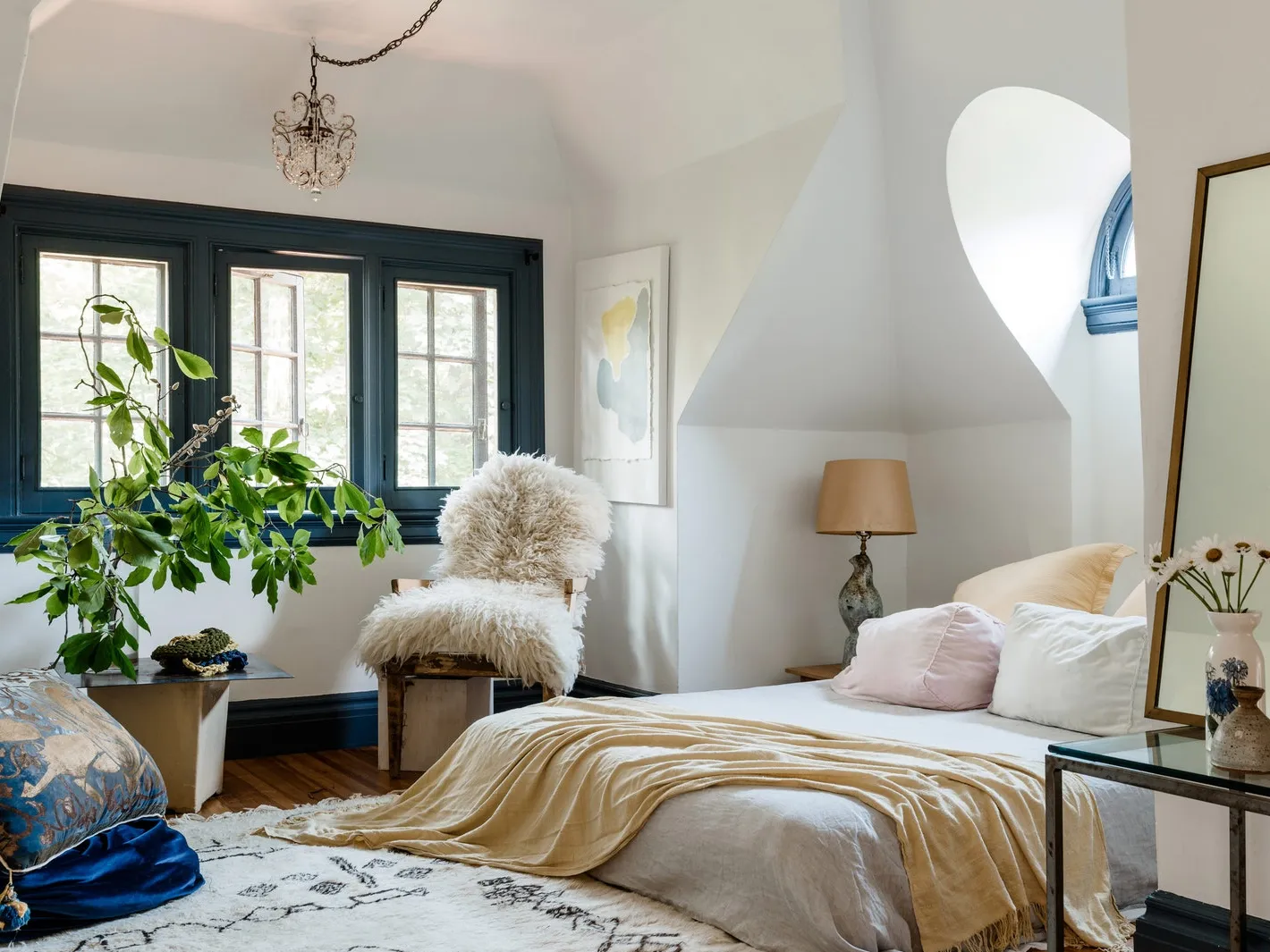
Cozy Bedroom
Creating a Cozy Bedroom Retreat (London homeowner edition)
There’s “nice bedroom,” and then there’s bedroom retreat—the kind of space that makes you breathe out the second you walk in. In London, coziness isn’t just about fluffy throws. It’s also about blocking light pollution, softening noise, and keeping the room comfortably warm without feeling stuffy.
Below is the exact approach I use as a bedroom designer: quick wins first, then the upgrades that make the biggest difference.
Start here: your 30-minute cozy audit (before you buy anything)

Declutter like a designer (fast, not painful)
Pick one surface at a time:
- Bedside tables
- Top of chest of drawers
- Window ledge
Aim for 50% clear. A bedroom looks calmer when your eyes aren’t constantly “reading” objects.
Fix the 3 things that kill coziness in London bedrooms
- Light (street lamps + early sunrise)
- Noise (roads, neighbours, hallway)
- Temperature (draughts, overheating, inconsistent heating)
For sleep comfort, a common guideline is keeping the bedroom around 16–18°C. (The Sleep Charity)
Layout that feels calmer instantly (even in a small room)

Put the bed where it can “land”
If you can, place the bed so:
- The headboard sits on a solid wall
- You have a comfortable walkway on at least one side
- You’re not blocking a radiator (you’ll overheat and the room feels stuffy)
Create “zones” without adding clutter
Even a compact bedroom can have mini-zones:
- Sleep zone: bed + soft lighting
- Dressing zone: mirror + wardrobe area
- Landing zone: a small rug/runner where your feet hit the floor
Tiny room trick: swap chunky bedside tables for floating shelves or a narrow ledge.
Colour + walls: the fastest route to cozy (and it can look expensive)
Choose a cozy palette that flatters London light
London’s natural light can run cool/grey, so cozy bedrooms usually do best with:
- warm neutrals
- soft earthy tones
- deeper “cocoon” colours (especially if you have layered lighting)
Designers are leaning into more enveloping, atmospheric bedrooms rather than bright, sterile white spaces. (ELLE Decor)
My easy paint formula (that rarely fails)
- Walls: warm neutral or muted mid-tone
- Woodwork: slightly softer or slightly deeper version of the wall colour
- Ceiling: keep it gentle (not stark white if the room feels cold)
Budget note: in the UK, painting a room often averages around £450, but prep and premium paints can push it up. (Checkatrade)
Lighting: the real “cozy switch” most bedrooms miss

If you do one thing, do this. Cozy bedrooms are rarely “one big light.”
Use the 3-layer lighting rule
- Ambient: ceiling light (soft, warm bulb)
- Task: reading lights by the bed
- Accent: lamp on a dresser / shelf lighting / warm glow in corners
Layered lighting is a standard designer technique because it adds depth and mood, not just brightness. (Lutron)
Dimmers + smart bulbs (optional, high impact)
Want cozy on demand? Add dimmers or smart bulbs:
- Smart bulbs often range roughly £7–£50 per bulb
- Dimmer switches roughly £20–£60 (hardware cost ranges) (Checkatrade)
Safety note (UK): fixed electrical work must comply with Part P rules in England and Wales—use a registered electrician when needed. (Electrical Safety First)
A “client-style” example (composite)
A couple in a Zone 2 flat told me their bedroom felt “like a waiting room” at night—one bright ceiling light, no lamps. They added two warm bedside lamps + a dimmer, and suddenly it felt like a boutique hotel. Total spend was far less than repainting, and it changed how the room felt every evening.
Windows: blackout + warmth = instant retreat

London reality: light pollution is real
If you’re dealing with streetlights, invest in:
- Blackout lining
- Thermal curtains (or layered blind + curtain)
If you can’t change the windows, consider secondary glazing
Secondary glazing is popular where replacement is tricky (listed buildings, conservation areas) and can help with comfort and noise. Typical costs are often quoted around £300–£500 per window (ballpark varies by size/type). (The Eco Experts)
Another “client-style” example (composite)
A homeowner near a busy road couldn’t replace their single-glazed sash windows. They added heavy curtains first (quick win), then secondary glazing later. They said the bedroom finally felt like a “quiet back room,” not a street-facing room.
Noise control: from easy fixes to full solutions

Quick wins (best ROI)
- Thick curtains
- Big rug + good underlay
- Fabric headboard
- Door seals / draft excluder
- Soft wall art (textile-based pieces)
Bigger steps
Full soundproofing can be a more involved (and pricey) project; day rates and approaches vary widely, and specialists can cost more. (Checkatrade)
If you’re soundproofing mainly for windows, Checkatrade’s guide includes example pricing and mentions secondary glazing around £400 per window. (Checkatrade)
Underfoot softness: what makes a room feel instantly warmer

Carpet = maximum cozy
As a rough guide, carpet supply can range around £6–£60 per m² (premium can go higher). (Checkatrade)
For fitting, some UK guides quote averages like £8.50 per m². (Checkatrade)
Wood/LVT + rug = cozy but cleaner
If you love the look of wood, add a generous rug to “soften” the bed zone.
For labour, MyBuilder gives UK ballparks like £20–£45 per m² fitting-only for engineered wood. (MyBuilder)
The bed: where comfort actually comes from

Upgrade order (most impact first)
- Mattress (support + temperature)
- Pillows
- Duvet suited to season
- Sheets + duvet cover
- Throw + cushions for texture
Many sources use 7–10 years as a rough mattress lifespan guide (plus signs like sagging, aches, worsened allergies). (The Sleep Charity)
For pricing, UK retailers show double mattresses from budget to premium (often ~£200 to £3,000+ depending on build). (Mattress Online)
Bedding refresh (easy win)
Dunelm shows duvet cover sets at many price points (you’ll see everything from budget to higher-end sets on the same category pages). (Dunelm)
Headboard = “retreat energy” fast
Upholstered headboards add softness, comfort for reading, and that finished, hotel-like look. You can see price points across popular UK retailers like John Lewis. (John Lewis & Partners)
Storage: the hidden key to a calm bedroom
A bedroom can be beautifully decorated and still feel stressful if storage is chaotic.
The London-friendly storage upgrades
- Ottoman bed (massive hidden storage)
- Over-bed cupboards (careful—can feel heavy visually)
- Built-in wardrobes for alcoves and awkward walls
Cost-wise, fitted wardrobes are often quoted in the £2,000–£4,000 range for many projects, and Checkatrade notes examples like a standard 3-door fitted wardrobe around £3,250 (ballpark). (Online Bedrooms)
Does storage add value?
Integrated wardrobes are frequently described by estate agents as a strong selling point because they look sleek and save buyers hassle and expense. (Ideal Home)
(Real talk: it won’t “guarantee” a higher price on its own—but it can improve appeal and reduce objections during viewings.)
Costs: London-friendly budgeting table (ballpark)
| Upgrade | Typical range (GBP) | Notes |
|---|---|---|
| Paint a bedroom | ~£450+ | UK average “paint a room” guide; prep/premium paint adds cost (Checkatrade) |
| Smart bulbs | ~£7–£50 each | Easy ambience upgrade (Checkatrade) |
| Dimmer switch | ~£20–£60 | Hardware cost range (Checkatrade) |
| Carpet (supply) | ~£6–£60 per m² | Premium can exceed £80/m² (Checkatrade) |
| Carpet fitting | ~£8.50 per m² (avg) | Often more cost-effective with multiple rooms (Checkatrade) |
| Engineered wood fitting (labour) | ~£20–£45 per m² | Fitting-only ballpark (MyBuilder) |
| Secondary glazing | ~£300–£500 per window | Varies by size/type (The Eco Experts) |
| Fitted wardrobes | ~£2,000–£4,000+ | Checkatrade examples ~£3,250–£3,400 ballpark (Online Bedrooms) |
Tip: London labour can run higher than national averages, so treat these as “planning numbers,” then get 2–3 quotes.
Tips that can add value to your home (not just coziness)
1) Built-in storage (buyers love “finished” bedrooms)
Integrated wardrobes are widely described as a strong selling point. (Ideal Home)
2) Energy comfort upgrades can affect price perception
Research reviews often find energy efficiency (EPC) improvements are associated with sale price premiums in the low single digits per EPC band in many studies (market-dependent, not guaranteed). (MDPI)
3) Lighting upgrades make viewings feel premium
Layered lighting makes a room feel more “designed,” and dimmers help buyers imagine relaxing there. (Lutron)
Pros and cons of creating a cozy retreat
Pros
- Better sleep environment (temperature and comfort matter) (The Sleep Charity)
- Less stress: your room stops feeling like a storage unit
- A more “sellable” bedroom with integrated storage and great lighting (Ideal Home)
Cons
- Costs can creep up when you combine flooring + storage + electrics
- Disruption (especially wardrobes, flooring, window upgrades)
- DIY electrics can cause compliance issues—Part P matters (Electrical Safety First)
FAQ (quick, practical answers)
What’s the cheapest change that makes the biggest difference?
Lighting + bedding. Add warm lamps (not just the ceiling light), then refresh the duvet cover/pillows. Smart bulbs can be a budget-friendly shortcut to cozy “scenes.” (Checkatrade)
What temperature should a bedroom be at night?
A commonly recommended range is around 16–18°C for sleep comfort. (The Sleep Charity)
How do I reduce noise without ripping the room apart?
Start with soft layers: thick curtains, rug + underlay, fabric headboard, and door seals. If window noise is the main issue, secondary glazing is one option people use. (The Eco Experts)
Do fitted wardrobes really help resale?
They’re often described as a strong selling point because they look built-in and remove hassle for buyers. (Ideal Home)
Just don’t treat it as a guaranteed “£X added” rule—it’s more about appeal and functionality.
Do I need an electrician for dimmers or new lights?
For many fixed electrical changes, yes—UK domestic electrical work must comply with Part P. (Electrical Safety First)

Comments (2)
[…] London bedrooms are often tight, so layout matters more than people think: […]
[…] Small bedrooms are basically a London rite of passage—box rooms, chimney-breast alcoves, odd corners, and wardrobes that feel like they were designed for one coat and a prayer. […]
Comments are closed.