


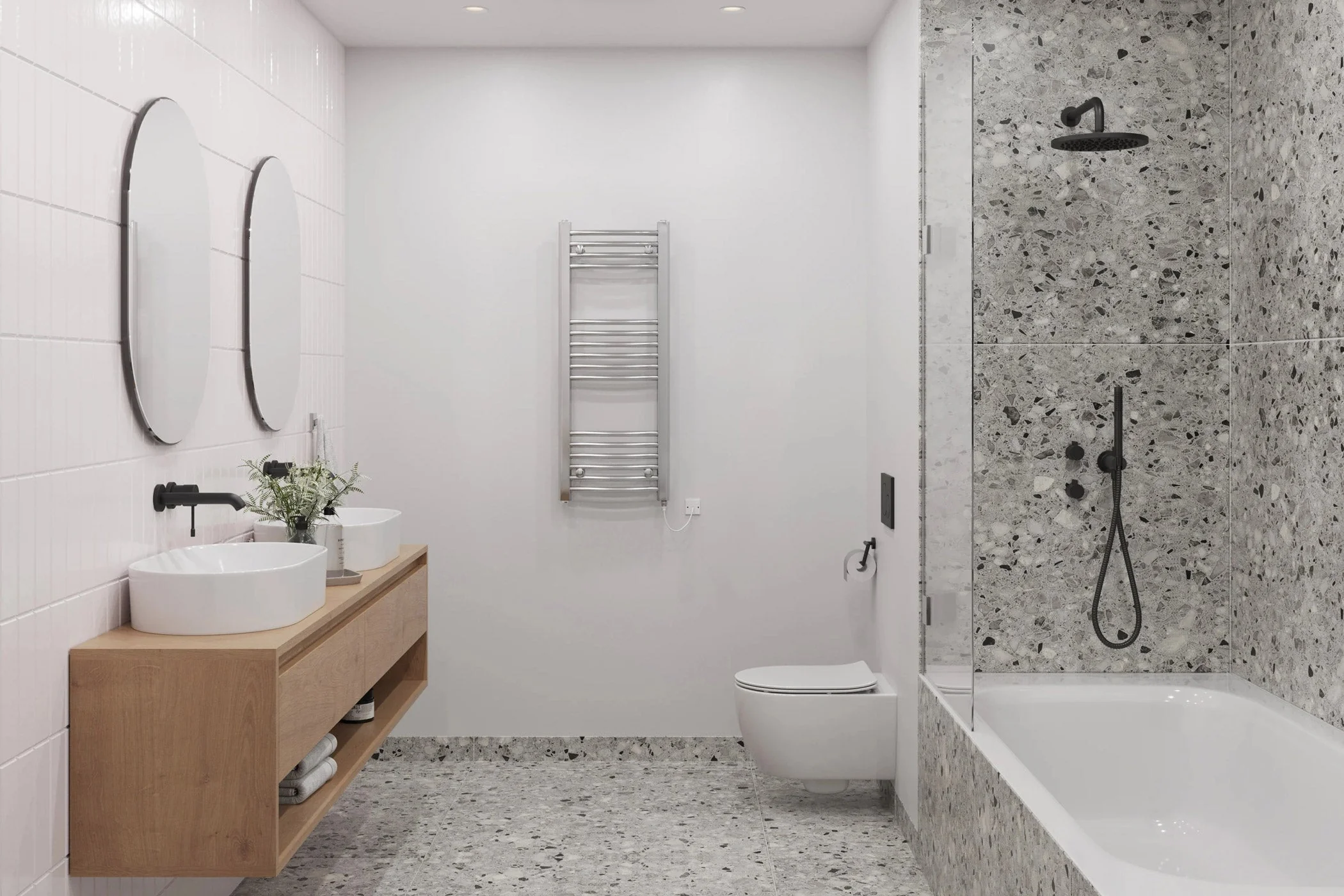
Bathroom Updates
Budget-Friendly Bathroom Updates

A tired bathroom does not always need a full rip-out to feel better. In many London homes, the smartest money move is to keep the layout, keep the plumbing where it is, and focus on the finishes and fittings that change how the room looks and works every day.
That approach matters because a full new bathroom in the UK commonly lands around £5,500 to £8,000, with an average near £7,000, and high-end or more complex projects can go well beyond that. Typical installation costs also add up quickly once you start changing the core suite: Checkatrade’s 2026 guide puts average installs at about £220 for a toilet, £175 for a basin, £500 for a shower, and £300 for a heated towel rail, while a full installation often takes 5 to 10 days. (Checkatrade)
For homeowners trying to improve a dated bathroom without turning it into a full renovation, the better question is not “How cheaply can I redo everything?” It is “Which updates will make the biggest visual and practical difference while leaving the expensive parts alone?”
Why budget updates often make more sense
In smaller London flats, period terraces, and family homes where one main bathroom has to stay functional, budget-led updates are often the most practical route. They cause less disruption, protect more of your budget, and can still leave the room feeling cleaner, brighter, and more current. That is especially useful when the suite itself still works, but the bathroom feels old because of worn sealant, poor lighting, dated accessories, tired paintwork, or a lack of storage.
It also keeps you out of the cost traps that usually push bathroom projects higher: moving drainage, re-routing pipework, changing the layout, or replacing several big-ticket items at once. Since even a standard full bathroom project can sit in the mid-thousands, a refresh only really stays “budget-friendly” if you resist the urge to turn it into a rebuild halfway through. (Checkatrade)
Start with the upgrades that make the room look cleaner
The cheapest bathroom improvements are often the ones that make the whole room feel more cared for.
Fresh sealant around the bath or shower, regrouting tired areas, repainting the ceiling, touching up walls, and deep-cleaning stained or dulled surfaces can change the feel of the room more than people expect. In many bathrooms, the problem is not the suite itself. It is the tired edges: yellowing silicone, mould-prone corners, patchy paint, and old fittings that make the whole space feel older than it is.


Ventilation matters here too. Government guidance on home ventilation is very clear that poor airflow allows moisture to get trapped, which can lead to condensation, damp, and mould. Some councils specifically advise keeping extractor fans running and, where possible, leaving them on for around 20 minutes after bathing or showering to help remove moisture. (GOV.UK)
That means one of the most cost-effective “style” improvements is not decorative at all. It is making sure the fan works properly and the room dries out well enough to stay looking fresh.
Replace small fittings before replacing the whole suite
One of the biggest budget mistakes is replacing items that still function just because the room feels dated overall.
A bathroom can look far newer with updated taps, a new shower head, a slimmer mirror, a better toilet seat, fresh handles, and more considered accessories, without touching the bath, basin, or toilet body. The reason this works is simple: the eye goes to the details. When the details look current, the whole room feels more current.


This is also where you can bring in a more competitive 2026 look without following trends too blindly. Warm finishes, softer lighting, wood-look textures, and calmer, more “lived-in” bathrooms are all feeding into current bathroom styling, but on a budget it is better to nod to those ideas through mirrors, lights, paint, shelving, and textiles than through a full redesign. (Ideal Home)
Focus on lighting before you spend heavily elsewhere

Poor bathroom lighting makes even a clean room feel flat. Better lighting is one of the fastest ways to improve the atmosphere of the space.
If your bathroom has one harsh central fitting, swapping to softer layered lighting can make it feel more expensive without a full refit. A better mirror light, a more modern ceiling fitting, or warmer lighting around the vanity area can change how the finishes read and make the room feel less clinical.
This is also a strong example of a budget update that helps daily use as much as appearance. Better lighting is not just about style. It helps shaving, skincare, makeup, and general comfort, which is why it usually feels like money well spent.
Improve storage so the room stays looking better

A bathroom refresh only works if it still looks tidy two weeks later.
Open surfaces attract clutter fast, especially in family homes and compact London bathrooms. That is why one of the best-value improvements is not a new bath or basin, but better storage: a mirrored cabinet, a narrower vanity, wall shelving that actually fits the room, or simple closed storage for everyday products.
This is the kind of change that helps the room feel more expensive without a luxury budget. It also makes small bathrooms feel calmer because less visual noise is on show. In practical terms, that often matters more than adding another decorative finish.
Water-saving upgrades are one of the smartest low-cost changes

If you want a budget update that is practical as well as cosmetic, start with water efficiency.
Waterwise says a low-flow shower head can use around 6 litres per minute, compared with roughly 10 to 15 litres per minute for a standard one, which can save up to 90 litres over a 10-minute shower. Waterwise also notes that toilets account for around 25% of household water use, and that dual-flush toilets generally use 4 to 6 litres per flush, compared with older models that may use up to 13 litres. Energy Saving Trust adds that switching to an eco shower head can reduce water use by around 9,200 litres a year, while using a four-minute shower timer could save about 17,000 litres a year. (Waterwise)
So if your current shower wastes water or your toilet is older and inefficient, those are not just “green” upgrades. They are sensible budget improvements that can reduce waste and improve the bathroom’s performance at the same time. They also fit with the UK’s direction of travel on clearer water-efficiency labelling for bathroom products, which the government confirmed for fixtures including toilets, basin taps, and shower products. (GOV.UK)
Builder’s Pro Tip
In budget bathroom updates, the best savings usually come from not moving anything wet. Keep the bath, basin, toilet, and major pipe runs where they are if you can. Put the money into lighting, storage, sealant, ventilation, and the details people touch every day. That is usually where the visible improvement per pound is highest.
What a sensible budget refresh can look like
A useful way to think about a budget bathroom update is in tiers:
Up to about £500 usually suits cosmetic improvements: paint, resealing, new accessories, a new mirror, a better shower head, and a focused deep refresh.
Around £500 to £1,500 can allow a stronger visual reset: upgraded lighting, improved storage, new taps, screen replacement, minor flooring changes, and better finishing details.
Around £1,500 to £3,500 is often where a bathroom starts to feel genuinely transformed without becoming a full renovation, especially if you keep the layout and avoid replacing every main sanitary item.
That is still well below the cost of many full bathroom installations, which is why this kind of middle-ground refresh can be attractive for homeowners who want a better result without stepping into full-renovation territory. (Checkatrade)
A practical example of where the money goes furthest
In many London bathrooms, the best-value refresh is not glamorous. It is something like this: keep the toilet, bath, and basin in place; replace the shower screen if it is tired; fit a better mirror; upgrade the light; reseal the wet areas; repaint the ceiling; improve storage; and change the shower head.
That sort of update does not create a showroom bathroom, but it can absolutely create a cleaner, brighter, more usable one. And for most households, that is the point.
Does a budget bathroom update add value?
A bathroom refresh can help buyer appeal, but it is wise to be realistic. Which? notes that a bathroom renovation can add value, with one surveyor estimating roughly 2% to 5% in some cases, but it also points out that outcomes vary and that extra bathrooms generally have a clearer value case than simply redoing finishes. Which? also cautions that bathroom and decorating work are harder to quantify than projects that add floor area, because personal taste plays such a large role. (Which?)
So the better way to think about budget bathroom updates is this: they may not deliver extension-style returns, but they can improve day-to-day comfort, strengthen presentation, and make the room feel more sale-ready. That is particularly true if the current bathroom looks worn, poorly lit, or badly maintained.
Mistakes to avoid
The most common budget mistake is doing too many unrelated jobs at once. A new tap, a different floor, a replacement basin, a new light, a new towel rail, and a revised shower area can quickly stop being a “refresh” and start becoming a piecemeal renovation.
Another mistake is prioritising statement features over basic function. Which? warns that bathroom planning mistakes often come down to poor spacing and layout judgement, such as cramped enclosures or vanity units that interfere with doors. Even on a smaller update, planning matters. (Which?)
And finally, do not ignore moisture. A stylish bathroom that still traps condensation is not really finished.
FAQ
What is the cheapest way to update a bathroom?
Usually the cheapest route is cosmetic: repainting, resealing, regrouting problem areas, replacing mirrors and accessories, and updating the shower head or lighting. Keeping the layout and main sanitaryware in place is what protects the budget.
Should I replace the whole bathroom or just refresh it?
If the suite is still sound and the layout works, a refresh often makes more sense. A full replacement becomes more worthwhile when there are leaks, major wear, poor layout, or several failing fixtures at once.
What budget bathroom updates make the biggest difference?
Lighting, sealant, storage, shower fittings, mirrors, ventilation, and water-efficient fixtures usually offer the strongest visual and practical return for the money.
Are water-saving shower heads worth it?
Often, yes. Low-flow or eco shower heads can cut water use significantly while maintaining a good showering experience, and some can save thousands of litres over a year. (Waterwise)
Will a budget update help when selling?
It can help presentation and buyer confidence, especially if the bathroom currently feels dated or poorly maintained, but it is better viewed as a buyer-appeal improvement than a guaranteed big-value upgrade. (Which?)
Final thoughts
A budget-friendly bathroom update works best when it is honest about what it is trying to do. It is not about pretending a tired bathroom is brand new. It is about fixing the details that make the room feel older, darker, more cluttered, or less pleasant to use.
For many London homeowners, that is the sweet spot: a bathroom that feels fresher, cleaner, and more considered, without the cost, mess, and downtime of a full renovation.

Comment (1)
[…] is something for every taste and budget, from simple, clean lines to bright geometric shapes and interesting […]
Comments are closed.