


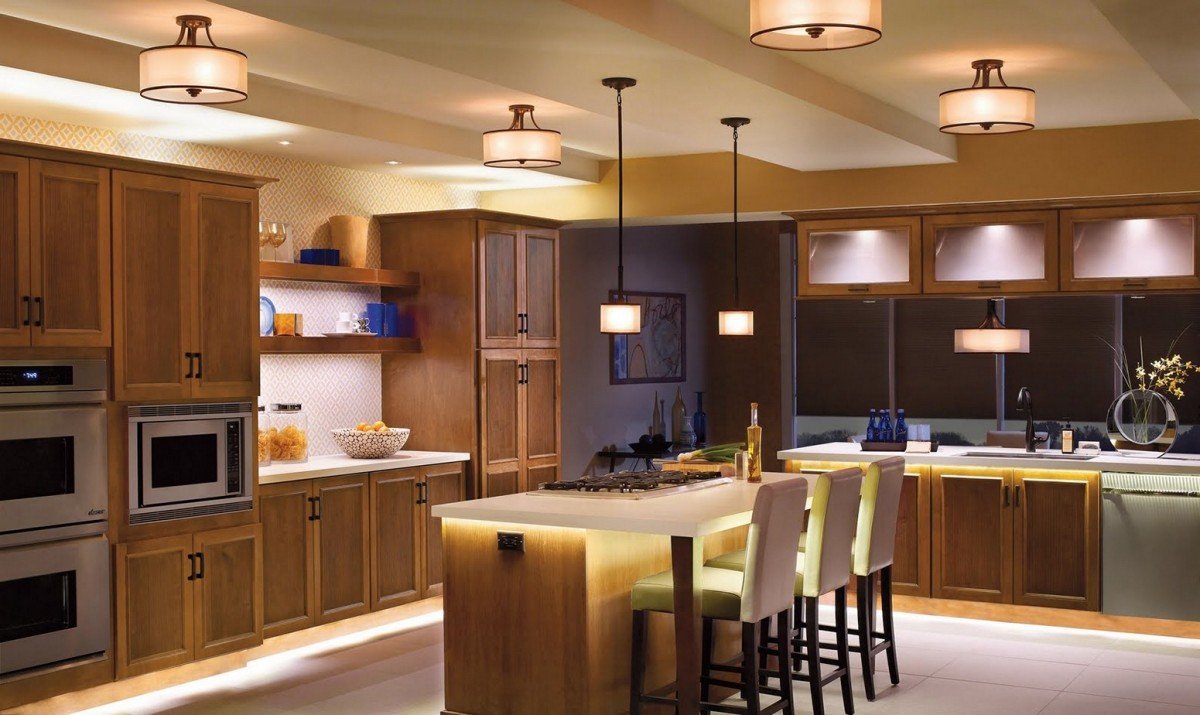
Kitchen Lighting Solutions
Kitchen Lighting Solutions (London Homeowners’ Guide)
If your kitchen feels a bit gloomy, “spotty”, or weirdly harsh at night, it’s usually not your cabinets or worktops — it’s the lighting plan. The good news: you don’t need a full renovation to fix it. In most London homes (Victorian terraces, ex-council flats, new-builds, rear extensions), the biggest upgrade comes from getting three things right:
- Layering (ambient + task + accent) (Homes and Gardens)
- Consistency (same colour temperature so the room doesn’t look patchy) (Homes and Gardens)
- Control (dimmers and zones so you can switch from “cooking” to “wine and chat” instantly) (Ideal Home)
Why kitchen lighting matters more than you think

A kitchen is basically a workshop + social space in one. You need bright, shadow-free light for prep… and softer light when you’re eating or just hanging out.
There’s also the resale side: property portals and staging guides regularly mention lighting as a simple way to make homes feel more modern, cheerful, and appealing in photos/viewings. (Rightmove)
That doesn’t mean lighting guarantees a higher price — but it can absolutely increase buyer confidence and make the space show better.
The “designer method” (quick plan before you buy anything)

Map your kitchen into zones (this fixes most problems)
Split the space into:
- Prep run (worktops, sink, hob)
- Island / peninsula
- Tall units (fridge/oven wall)
- Dining (if you eat in the kitchen)
- Walkways (night-time safe lighting)
Most “bad lighting” happens because ceiling lights are centered in the room — and your body blocks the light while you’re working, creating shadows right where you need to see.
Decide how bright is “bright enough” (lux in real life)
Guidance varies, but a solid target is:
- Worktops / sink / hob: aim for at least ~400 lux, and many kitchens feel best around ~500 lux for food prep. (ledrise.eu)
If you don’t want to overthink it: install good under-cabinet lighting and you’ll usually hit the practical brightness you want, without turning the whole room into an operating theatre.
Get the basics right: colour temperature + CRI
Colour temperature (Kelvin)

- 2700K–3000K: warmer and cosy (great for evening mood; many designers like 3000K in kitchens) (Homes and Gardens)
- 3500K–4000K: more neutral/clean, often preferred for strong task clarity (especially darker kitchens)
Big rule: don’t mix lots of different Kelvin temperatures in the same space — it looks messy and “unsettled”. (Homes and Gardens)
CRI (Colour Rendering Index)
If you’ve ever noticed tomatoes looking dull or your cabinets looking “off” at night, that’s usually CRI. Aim for CRI 90+ in kitchens so food and finishes look true. (Homes and Gardens)
The 3 layers that make a kitchen feel expensive
1) Ambient lighting (your base layer)

This is general fill-light so the room doesn’t feel cave-like.
Best options for London kitchens
- Downlights (popular, clean look)
- Surface / flush ceiling lights (good for low ceilings, rentals, or minimal ceiling void)
- Track lighting (handy for awkward layouts or open-plan zones)
Designer tip: Ambient lighting should not be your only layer. On its own, it causes shadows on the worktops.
2) Task lighting (the “why didn’t I do this sooner” layer)

This is the most important layer for daily life.
Under-cabinet lighting
- LED strips or bars under wall units create shadow-free light exactly where you prep. (ledrise.eu)
- It’s also a surprisingly strong “premium” signal to buyers because it makes the kitchen look considered (and photographs better).
Island task lighting
- Pendants can be both task + style, but only if sized and placed properly (more on that in a second).
3) Accent lighting (the mood + depth layer)
This is what makes the kitchen feel “designed”, not just illuminated:
- In-cabinet or shelf lighting
- Plinth/toe-kick lighting (also great as a nightlight)
- Soft wall lighting near dining
Accent lighting is where you create atmosphere — especially useful in open-plan kitchen-diners.
Fixture-by-fixture tips (what to choose, and the common mistakes)
Downlights

Pros
- Clean ceiling, flexible layout
- Works in small kitchens and low ceilings
Common mistake: too few downlights, or placed in a way that lights your shoulders, not your worktops. Planning matters (spacing/positioning). (Homes and Gardens)
Costs (typical UK ranges)
- Supply + install often lands around £300–£500 per project, with units ~£20–£75 each depending on spec. (checkatrade.com)
Pendant lights (especially over islands)
Pros
- Adds character instantly
- Great for zoning open-plan spaces
Common mistakes
- Too small (looks lost)
- Too low (blocks sightlines)
- Too bright without dimming (feels harsh at night)
Quick rule: put pendants on their own circuit or dimmer so you can run them low in the evening.
Under-cabinet LED strips
Pros
- Best value-per-pound upgrade
- Fixes shadowy worktops fast
What to look for
- Diffuser channel to avoid “dotting”
- CRI 90+
- A proper driver and accessible placement
Costs
- Materials often ~£20–£50 per metre for LED strips, plus installation time. (MyBuilder)
- Example guides put under-cabinet lighting (around four lights) around ~£265 in typical installs. (checkatrade.com)
Dimmers and smart controls (make it feel high-end)
If you do nothing else: separate your kitchen into zones and add dimmers.
For LED dimming, compatibility matters. In many cases, trailing-edge dimmers are commonly recommended for LED loads and smoother dimming. (Electrical Counter)
Costs in London: realistic budget ranges
London labour varies by job size and urgency, but many guides put typical electrician rates in London around £50–£60/hr, with higher rates possible for small/emergency callouts. (checkatrade.com)
Here are practical ballparks many homeowners use for planning:
| Item | Typical range |
|---|---|
| Electrician hourly rate (London) | ~£50–£60/hr (can be higher for small/emergency jobs) (checkatrade.com) |
| Downlights supply + install (project) | ~£300–£500 (checkatrade.com) |
| Install ~6 recessed spotlights (example budget) | ~£200 (checkatrade.com) |
| Under-cabinet lighting (example) | ~£265 (checkatrade.com) |
| LED strip materials | ~£20–£50 per metre (MyBuilder) |
| Like-for-like light fitting install | ~£100 average (MyJobQuote) |
Real costs depend on access, ceiling type, whether wiring/drivers need upgrading, and how much of the kitchen is already finished.
Safety and UK regs (quick, non-scary version)
In England and Wales, certain electrical work is covered under Part P (Building Regulations). New installations or major alterations (like new circuits) are typically the kinds of work that need the correct route for approval/certification. (niceic.com)
Simple like-for-like replacement of an existing light fitting is often treated as non-notifiable (as long as you’re not adding new wiring/circuits). (niceicelectricians.co.uk)
When in doubt, use a qualified electrician — and keep certification paperwork for future buyers.
Tips that can add value (or at least “saleability”)
These are the upgrades that tend to make kitchens feel newer, brighter, and more premium — without ripping anything out:
- Add under-cabinet lighting (buyers notice; photos improve) (checkatrade.com)
- Use consistent Kelvin across the kitchen (it instantly looks more put-together) (Homes and Gardens)
- Install dimmers and zones (day-to-night flexibility feels expensive) (Ideal Home)
- Upgrade to LEDs (efficiency + less heat + long lifespan) (Energy Saving Trust)
- Make sure everything works for viewings (estate-agent/staging advice repeatedly highlights lighting as a quick win) (Rightmove)
A few real-world style examples (anonymised, typical outcomes)
These are composite client experiences based on common London projects — not promises, but they show what usually changes when lighting is done properly.
“Victorian terrace in South London — the kitchen finally felt ‘finished’”
They had a rear extension kitchen with beautiful cabinetry, but evenings felt cold and uneven. We added:
- Under-cabinet LED strips (CRI 90+)
- Warm-neutral 3000K baseline
- Dimmable pendants over the island
Result: they said cooking became easier immediately (no shadows on the chopping board), and the kitchen-diner felt cosy at night. When they later remortgaged, the valuer didn’t itemise “lighting”, but they did comment on the kitchen presentation and finish — exactly the kind of impression staging guides talk about. (Zoopla)
“East London flat — small galley kitchen looked bigger”
The kitchen was narrow and the single ceiling fitting made it feel like a tunnel. We switched to:
- Even ambient coverage (downlights/compact ceiling lights)
- Bright task lighting on the worktop run
Result: it felt wider and cleaner, and they stopped relying on harsh “cool white” bulbs. (Consistency matters.) (Homes and Gardens)
“North London family home — faster viewings after a quick refresh”
They didn’t want a refit before selling, so we did a lighting-only refresh:
- Replaced dated fittings
- Ensured brighter modern lighting for photos
- Checked all bulbs were working and colour-matched
Result: photos looked more inviting and the kitchen read as “up to date,” aligning with common selling tips from property portals. (Rightmove)
Pros and cons (honest version)
Pros
- Safer, easier cooking (fewer shadows; better visibility) (ledrise.eu)
- Looks more premium with layered lighting (Homes and Gardens)
- Better colour accuracy with CRI 90+ (Homes and Gardens)
- Lower running costs with efficient LEDs (Energy Saving Trust)
Cons
- Poor planning = glare, dark spots, “spotlight ceiling”
- LED dimming can flicker/buzz if dimmer/driver/bulb compatibility is wrong (choose carefully) (Electrical Counter)
- Retrofits can get fiddly in older properties if access is difficult (cost can jump)
FAQ (London homeowner edition)
What colour temperature should I choose for my kitchen?
A lot of designers land around 3000K for kitchens — warm enough to feel inviting, neutral enough to look fresh. Just keep it consistent across fittings. (Homes and Gardens)
How bright should my kitchen worktops be?
Aim for at least ~400 lux, and many kitchens feel best around ~500 lux for prep tasks. Under-cabinet lighting is the easiest way to get there. (ledrise.eu)
Is under-cabinet lighting worth it?
Yes — it’s usually the highest “daily life” ROI upgrade, and it instantly makes the kitchen feel more premium. (checkatrade.com)
Do I need Building Control for changing lights?
Some work under Part P is notifiable (especially new circuits/major alterations). Like-for-like fitting swaps are commonly treated as non-notifiable when no new wiring/circuits are involved — but the work still must be safe and compliant. (niceic.com)
Why do my LEDs flicker on a dimmer?
Often it’s dimmer/bulb/driver mismatch. Trailing-edge dimmers are commonly recommended for LED loads, but always check compatibility lists. (Electrical Counter)
Roughly how much does it cost in London?
As a planning guide: electrician rates often sit around £50–£60/hr, and downlight projects often land around £300–£500 depending on scope. (checkatrade.com)

Comment (1)
[…] you’ve cleaned the windows and painted the walls), it’s usually not your cabinets—it’s your lighting plan. Most London kitchens I see have […]
Comments are closed.