


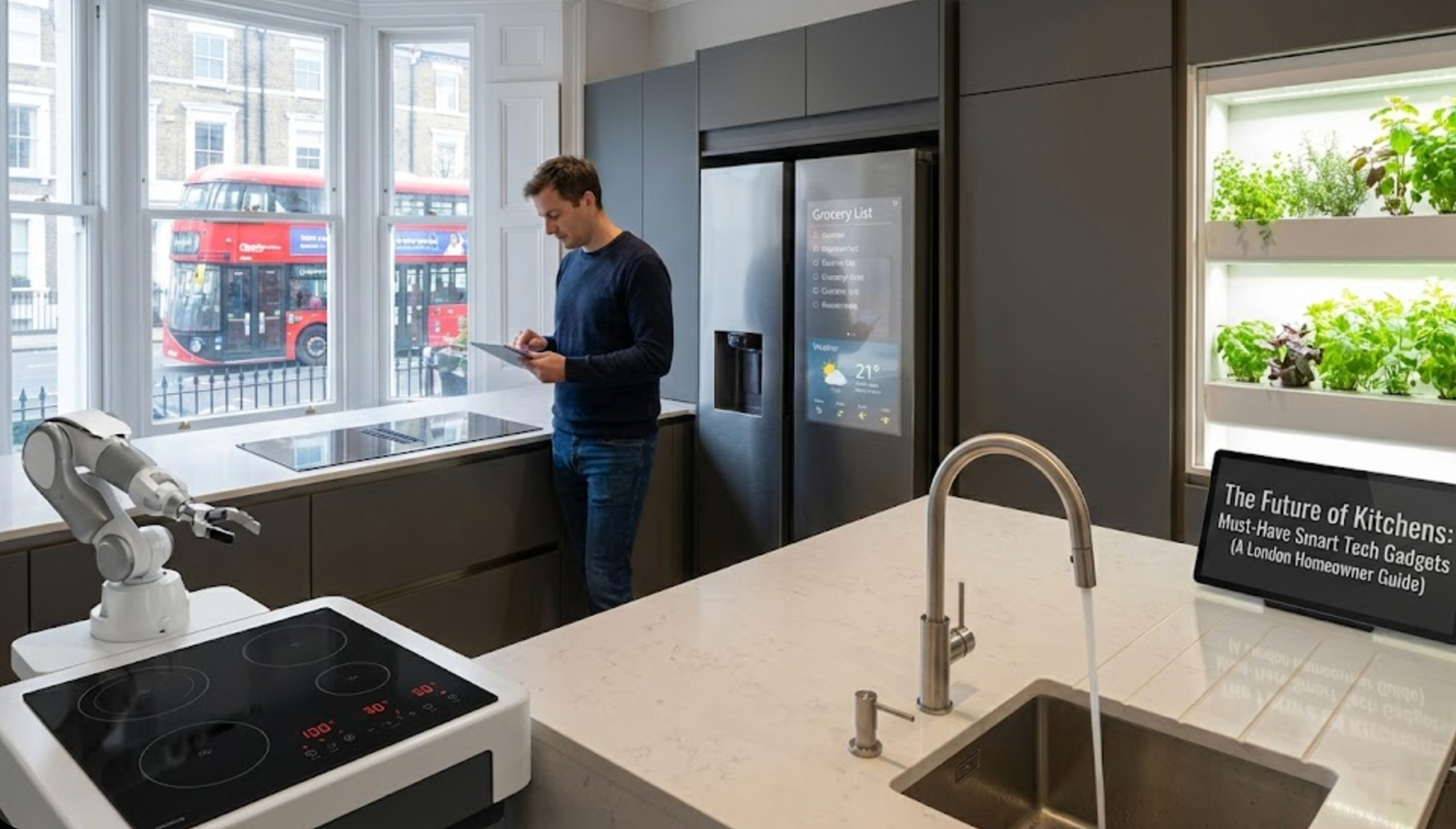
The Future of Kitchens
The Future of Kitchens: Must-Have Smart Tech Gadgets (A London Homeowner Guide)
If you’re renovating a kitchen in London right now, “smart” doesn’t mean turning your home into a spaceship. It means fewer daily annoyances: less lingering cooking smell in open-plan spaces, quieter dishwashing in flats, faster weeknight meals, and a kitchen that feels premium when it comes time to sell.
The trick is picking gadgets that genuinely improve how the kitchen works — and skipping anything that’s basically an app with a plug.
What a “smart kitchen” actually is in 2026

A smart kitchen is just three things working together:
- Connected appliances (oven, hob, dishwasher, fridge) that can automate, alert, and optimise.
- Sensors + safety (leak sensors, air quality) that prevent expensive surprises.
- A simple ecosystem so everything plays nicely — ideally via more universal standards like Matter, so you’re not locked into one brand forever. (CSA-IOT)
A quick reality check: connected features can disappear when support ends. (Google’s Nest Secure lost support on April 8, 2024, and older Nest thermostats lost app/Assistant control starting October 25, 2025 — they still work manually, but you lose the “smart” part.) (Google Nest Community)
So: buy smart tech that still works well when the Wi-Fi (or the company) isn’t perfect.
Must-have smart kitchen gadgets (the ones I actually recommend)

Smart ovens and guided cooking

If you cook even a few times a week, a connected oven is one of the most noticeable quality-of-life upgrades: app alerts, temperature probes, guided programs, and less “is it done yet?” hovering.
What to look for
- A reliable food probe (game changer for roasts)
- Good self-cleaning (pyrolytic is the one clients love long-term)
- Controls that are still easy without the app
Client story (Hackney, 2-bed flat):
A couple told me their old oven made dinner feel like a chore. After installing a guided-cooking oven with a probe, they started hosting again because timing was predictable. When they later got an estate agent’s opinion for a remortgage valuation, the feedback was basically: “the kitchen looks new and premium,” and it helped justify a stronger figure — but the agent also reminded them comps matter more than a single feature.
Venting induction (induction hob + extractor in one)

For London homes, this is the “designer favourite” because it solves two common problems:
- You get clear sightlines (no big hood blocking cabinets)
- You reduce lingering cooking smells in open-plan spaces
What to know before you buy
- Decide early: ducted vs recirculating (this affects planning and cost)
- Check filter access — you want “easy to clean,” not “I’ll never touch it”
- Look for quiet modes if your kitchen faces the living area
Client story (Wandsworth, open-plan terrace):
Family of four, lots of frying/quick meals, and they hated the smell hanging around. Vented induction made the space feel calmer and “hotel-clean.” When they sold later, viewers consistently commented on how sleek the kitchen looked — it wasn’t the only reason they got a strong offer, but it was a repeated positive that helped them stand out in viewings.
Smart dishwashers that are genuinely quieter (and safer)

In flats especially, noise matters. A good dishwasher upgrade is one of those “you only notice it when it’s bad” things.
Smart features worth paying for
- Status notifications (so you’re not opening it mid-cycle)
- Efficient drying
- Leak protection features (still add a sensor — see below)
Smart fridge features that reduce food waste

I’m not saying everyone needs a fridge with a screen. But smart cooling + better organisation can be brilliant for families or flat-shares.
Worth it if you:
- Meal plan
- Share shopping lists
- Want reminders for doors left open, filters, temps
Skip it if you:
- Mostly cook “fresh daily” and don’t store much
- Hate screens in the kitchen (fair!)
The “hero tap”: boiling + filtered water

In London, this is one of the most “premium-feeling” upgrades because it reduces counter clutter (goodbye kettle) and makes the kitchen feel more bespoke.
Where it adds value
- Buyers tend to notice it immediately
- It reads like a considered upgrade, not a gimmick
Smart lighting (the cheapest upgrade that changes everything)
If you do one smart upgrade on a tight budget, do lighting scenes:
- Prep lighting (bright, even)
- Dinner lighting (warm, flattering)
- Night light (low, safe)
It also photographs beautifully — which matters more than people admit when selling.
Hidden winners: pop-up sockets and charging drawers
This isn’t “smart” in a flashy way, but it is modern-luxury practical:
- Keep worktops clear
- Charge devices out of sight
- Make islands actually functional
If you’re renovating anyway, plan power properly and use compliant installation.
Leak sensors (the most boring, most valuable upgrade)
Under-sink leaks in London flats can become expensive fast — and awkward with neighbours.
My baseline recommendation:
Put a leak sensor under the sink, near the dishwasher, and anywhere you have hidden pipework.
Client story (Canary Wharf apartment):
A client got an alert at work, came home, and caught a slow leak before it soaked the cabinet base. Their exact words were: “That tiny sensor paid for itself in one day.” No glamour — just saved money and stress.
Typical price ranges (UK) at a glance
Prices swing with promotions and specs, but these ranges help you budget:
| Upgrade | Typical cost range (GBP) | Notes |
|---|---|---|
| Connected built-in oven | ~£400–£1,000+ | Pay for the probe + cleaning + usability |
| Vented induction | ~£2,500–£4,000+ | Plan ducting/recirculation early |
| Premium integrated dishwasher | ~£600–£1,000+ | Quiet + efficient drying is the win |
| Smart/feature fridge | ~£1,200–£2,500+ | Measure access routes carefully (London hallways!) |
| Boiling/filtered tap system | ~£1,000–£1,700+ | Factor filter servicing + space under sink |
| Smart lighting (under-cabinet + scenes) | ~£70–£300+ | Huge “feel” improvement for small spend |
| Leak sensors | ~£15–£90 each | Place multiple for best protection |
For bigger renovation budgeting context: Zoopla cites kitchen renovations commonly landing around £20,000–£30,000 on average, and Which suggests a rule of thumb of not spending more than 5–10% of your home’s value (plus contingency). (Zoopla)
Tips that can add value (without wasting money)
Keep it “buyer-friendly smart”
The goal is a kitchen that feels premium to most people:
- Great lighting
- Quiet appliances
- Clean ventilation
- One-touch conveniences (tap, dishwasher, oven)
- Safety (leaks)
Zoopla’s improvement guidance and broader buyer behaviour consistently show kitchens are a major focus — not the only thing buyers care about, but a big one. (Zoopla)
Don’t let tech become a liability
- Prefer devices that still work well manually if the app changes.
- Use more universal standards where possible (Matter helps reduce ecosystem lock-in). (CSA-IOT)
- Keep all manuals/warranties and leave a simple “how to use the kitchen” note when you sell.
Get electrical work done properly
If you’re adding new circuits or doing significant kitchen electrical changes, use the right professionals and certification routes — it protects safety, insurance, and sales paperwork headaches later. (Electrical Safety First)
Smart home appeal is real — but don’t overclaim ROI
A Samsung survey reported UK buyers say they’d pay a premium for smart homes (their research suggests an average willingness around 7.7%). That’s interesting for directionally understanding demand, but it’s not a guaranteed uplift for any single renovation. (Samsung Global Newsroom)
Pros and cons (designer-honest)
Pros
- Time savings (alerts, automation, guided cooking)
- Better comfort in open-plan layouts (ventilation + quieter appliances)
- Cleaner look (less countertop clutter)
- Safety (leak detection can prevent expensive damage)
Cons
- Ecosystem mess if you buy random brands with separate apps
- Ongoing costs (filters, parts, servicing)
- Support risk (some products lose smart features over time) (The Verge)
- Install complexity (especially ventilation and electrics) (Electrical Safety First)
FAQ
Will a smart kitchen actually add property value in London?
It can, mainly because it makes the kitchen feel newer, more premium, and more practical — but value is still driven by location, layout, condition, and comparable sales. A safe way to think about it: choose upgrades that lots of buyers appreciate (lighting, ventilation, quiet appliances, boiling/filtered tap, leak safety). (Zoopla)
What’s the best “bang for buck” smart upgrade?
Smart lighting scenes + under-cabinet lighting, then leak sensors. They’re relatively low cost and high impact day-to-day.
What should I prioritise in a small London kitchen?
Space wins:
- Induction (often slimmer look)
- Smart lighting (makes small kitchens feel bigger)
- Charging drawers/pop-up sockets to keep surfaces clear
- Better ventilation (especially if your kitchen shares air with the living room)
How do I avoid buying tech that becomes obsolete?
Stick to devices that:
- Work well manually
- Have good after-sales support
- Use more open standards when possible (Matter) (CSA-IOT)
Do I need an electrician for smart kitchen upgrades?
For plug-in devices, no. For built-in appliances, sockets, new circuits, or significant alterations, follow Part P guidance and use appropriately registered installers. (Electrical Safety First)
Want more ideas like these? Read our full guide to Smart Kitchen Technology on Buildify.