


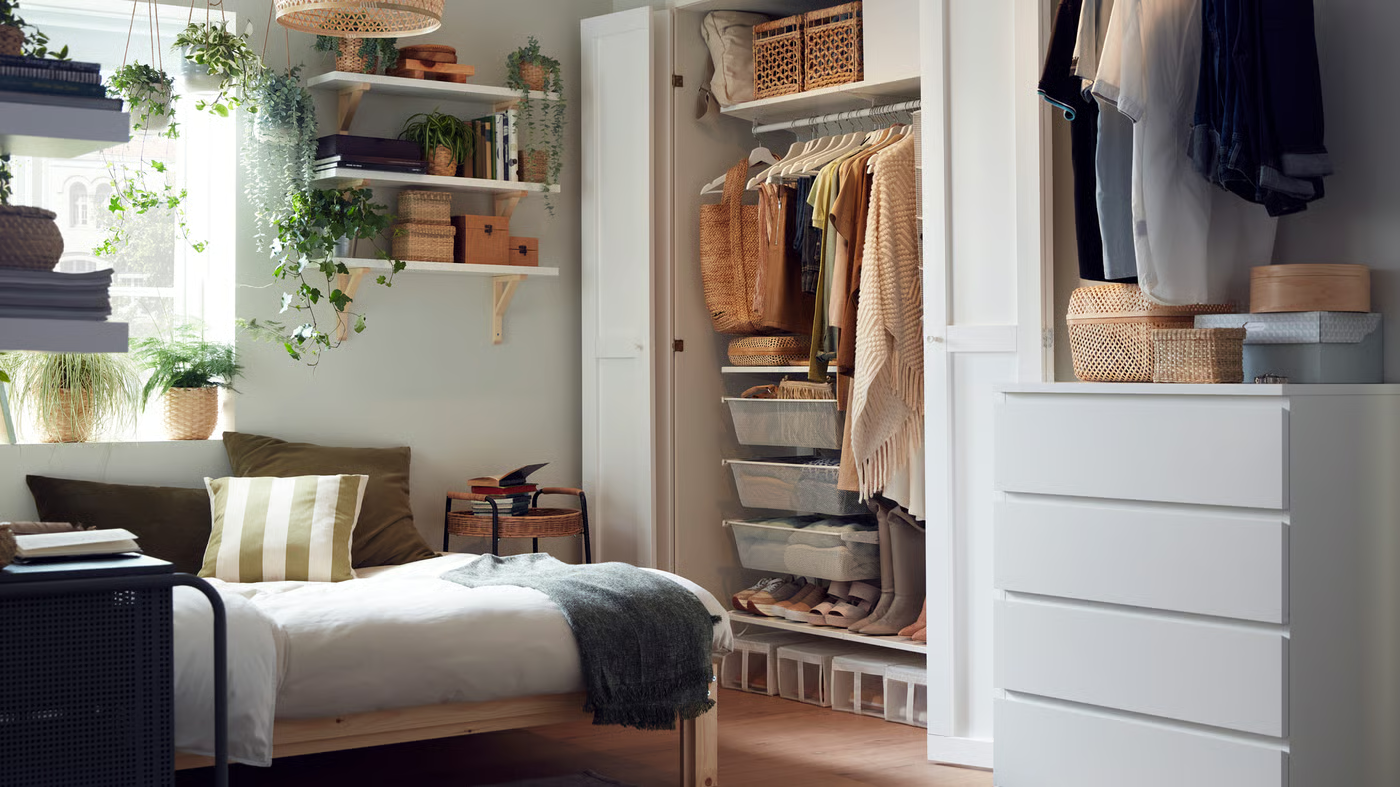
10 Brilliant Small Bedroom Organization Ideas (London Homeowner Edition)
Small Bedroom Organization Ideas

If you live in London, you already know the truth: a “small bedroom” often has to do the job of a bedroom, dressing room, storage room, and sometimes even a mini office.
The good news? You usually don’t need more square footage—you need a smarter layout and better storage decisions. In this guide, I’ll walk you through 10 genuinely useful small bedroom organization ideas (not just Pinterest-pretty ones), with realistic UK/London price guidance, pros and cons, and a few client-style examples to show what actually changes after a transformation.
I’m writing this in a casual, practical designer voice, but everything price/legal/property-related is grounded in current UK sources checked 28 Feb 2026. For example, Checkatrade’s current fitted wardrobe guide still lists a standard 3-door fitted wardrobe at around £3,250 and a 2-section custom-built option at £3,400, while Planning Portal and LEASE confirm the key permissions caveats for listed/leasehold homes. (Checkatrade)
Start Here First (Before You Buy Anything)

Before we get into the 10 ideas, do this first. It takes 10 minutes and saves you money.
The quick designer audit
Measure:
- Wall width(s)
- Ceiling height
- Bed size + clearance around it
- Door swing
- Radiator position
- Window opening
- Any alcoves/chimney breast projections
Then do a fast edit:
- Seasonal clothes you won’t use for 3+ months
- Duplicate bedding
- “I might need this someday” floor clutter
- Broken hangers / random boxes / dead storage
My rule for small bedrooms
Organize by routine, not just category.
That means:
- Night-time items near the bed
- Daily clothes at easy reach
- Seasonal storage up high or under the bed
- Rare-use items in the least accessible zones
This is the difference between a room that looks organized and one that stays organized.
Average / Typical Price Guide (UK & London Planning Budget)
Prices vary a lot depending on finish, brand, access, installation, and whether you go DIY, modular, or bespoke. London labour and awkward access (stairs, tight hallways, parking) can push costs higher than national averages.
Checkatrade’s current fitted wardrobe guide gives useful UK benchmark pricing, and the table below mixes that with current IKEA/Argos/Dunelm example prices for budget planning. (Checkatrade)
Small Bedroom Organization Cost Table (Typical Planning Ranges)
| Upgrade / Item | Budget / DIY | Typical Mid-Range | Premium / Bespoke | Notes |
|---|---|---|---|---|
| Fitted wardrobe (3-door) | — | ~£3,250 avg | £4,800+ | Checkatrade benchmark (UK average) |
| Custom-built fitted wardrobe (2-section) | — | ~£3,400 avg | £4,500+ | Great for alcoves/awkward walls |
| Carpenter labour (labour only) | — | ~£270/day avg | £300+/day in some areas | Materials extra |
| Modular wardrobe (IKEA PAX combinations) | ~£337–£402 examples | £400–£1,200+ | — | Good middle ground |
| Ottoman/storage bed (double) | ~£166–£320 entry examples | £400–£560 common examples | £650–£885+ | Wide range by finish/features |
| Under-bed storage (Dunelm) | £3–£12 | £18–£35 | £42–£50+ | Bags, trunks, box sets, drawers |
| Floating shelves (IKEA LACK) | £5–£13 | £20–£55 | Custom joinery pricing | Add fixings/installation |
| Wall-mounted bedside table | ~£25 example | £40–£150 | Bespoke niche/joinery | Great for floor space |
| Over-door hooks | ~£6–£8 | £10–£30 | — | Cheapest instant win |
| Drawer/wardrobe organisers | ~£6 (SKUBB set) | £10–£60+ | — | Best “daily use” ROI |
| Vacuum bags | ~£3 | £8–£20 | — | Great for seasonal bedding/clothes |
Source notes (pricing examples):
- Checkatrade “Fitted Wardrobes Cost Breakdown 2026” (3-door average and custom-built average). (Checkatrade)
- IKEA GB pages show current example prices like PAX combinations (£337/£402), SKUBB set of 6 (£6), LACK shelves (£5/£13/£20), and GRÅFJÄLLET wall-mounted bedside table (£25). (IKEA)
- Argos double ottoman/storage bed category includes live examples from budget to premium (e.g., £166 sale, £290, £320, £495, £650, £885). (Argos)
- Dunelm under-bed storage page shows examples from £3 vacuum bags to £50 trunks/drawers; over-door hook example at £6. (Dunelm)
1) Go Floor-to-Ceiling with Fitted Wardrobes (Especially in Alcoves)

This is the big one. If your London bedroom has alcoves beside a chimney breast, that “awkward shape” is actually a storage opportunity.
Why it works
Freestanding wardrobes waste space:
- gaps at the top
- gaps at the sides
- awkward dead corners
A fitted wardrobe uses those inches properly, which matters a lot in a compact room.
Ideal Home also highlights fitted wardrobes and sliding doors as especially effective in small bedrooms, and notes they’re worth considering when you’re trying to use confined space more efficiently. (Ideal Home)
How I’d design it
- Run it to the ceiling
- Use double hanging rails for shorter items
- Put seasonal storage on the top shelves
- Add a mix of shelves + drawers, not just hanging
- Consider sliding doors if your bed is close to the wardrobe
Typical cost
- ~£3,250 average for a standard 3-door fitted wardrobe
- ~£3,400 average for a 2-section custom-built wardrobe (useful for alcoves)
- Wider or more premium designs can go £4,800+ (Checkatrade)
Pros
- Best space efficiency
- Looks cleaner and more “built-in”
- Great for awkward London room shapes
- Usually improves buyer appeal visually
Cons
- Highest upfront cost
- Less flexible if you move house
- Needs good planning (radiators, skirting, uneven walls)
Client-style example (illustrative)

A Victorian terrace primary bedroom in East London had two alcoves and a freestanding wardrobe that blocked half the light. We replaced it with full-height fitted units in both alcoves and kept the center wall clear. Result: the room felt bigger, the floor stayed visible, and the owners said getting dressed went from “digging through piles” to “everything has a place.”
Value outcome: no formal valuation was done, but their estate agent later used the fitted storage as a selling feature in the listing photos.
2) Upgrade to an Ottoman Bed (Use the Biggest Footprint in the Room)

Your bed already takes up most of the room—so it should earn its keep.
Why it works
Argos explicitly markets ottoman/storage beds as a way to combine sleeping space with hidden storage and help keep a room neat, especially when space is tight. (Argos)
That’s exactly right in practice.
Best use for ottoman bed storage
Store:
- spare duvet/pillows
- winter clothes in summer (and vice versa)
- luggage
- guest bedding
- bulkier items you don’t need daily
Designer tip
Choose side-lift vs end-lift based on your room clearance.
- Tight foot-of-bed space? Go side-lift
- Tight side clearance? Consider end-lift
Typical price (double ottoman/storage beds)
Argos examples currently range from budget sale models (~£166) and entry/mid (£290–£320) up to £495–£650+, with premium listings going much higher. (Argos)
Pros
- Massive hidden storage without adding furniture
- Helps remove bulky drawers/chests
- Makes small rooms easier to keep tidy
Cons
- Heavier to assemble / move
- Cheap lift mechanisms can feel clunky
- Daily access can be annoying if overstuffed
Client-style example (illustrative)
A new-build flat in Zone 2 had a tiny main bedroom and no built-in wardrobe. Swapping a standard divan for an ottoman bed let the owners remove a plastic storage tower and two under-bed tubs.
Value outcome: no measured uplift, but the room looked much more spacious in photos and viewings.
3) Turn Under-Bed Storage Into a System (Not a “Stuff Graveyard”)
Under-bed storage works brilliantly only if it’s organized.
Ideal Home calls under-bed storage one of the smartest ways to add lots of storage without visually cluttering the room, and also recommends measuring first and choosing easy-glide options. (Ideal Home)
The best setup
Create 3–4 categories max:
- Bedding
- Seasonal clothing
- Shoes
- Travel / luggage accessories
Then assign one container type per category:
- Vacuum bags for bulky textiles
- Rigid boxes for shoes/structured items
- Fabric bags for linens
- Wheeled boxes for frequent access
Dunelm’s current under-bed range spans low-cost bags and vacuum sets up to larger trunks and box sets, so you can build a system on almost any budget. (Dunelm)
Typical price
- Vacuum bags: ~£3
- Fabric/soft under-bed storage: ~£7–£24
- Rigid box sets / trunks / drawers: ~£30–£50+ (Dunelm)
Pros
- Very high storage return for low cost
- Keeps visual clutter off display
- Easy starter project (DIY-friendly)
Cons
- Can become chaotic fast without labels
- Hard access if bed is low
- Dust buildup if you leave items exposed
Practical tip that changes everything
Leave one small “buffer gap” so containers slide in/out easily. If you pack every inch, you’ll stop using the system.
4) Use Vertical Space (Shelves Above the Door, Bed, or Desk)
Small rooms don’t just need more storage—they need storage that doesn’t eat floor space.
House & Garden’s small bedroom ideas also emphasize using tall ceilings and building upwards rather than outwards, including wall shelving for extra storage. (House & Garden)
Great spots for vertical storage
- Above the door
- Above a desk/vanity
- In alcoves
- Above a headboard (installed safely and sensibly)
- Around a doorway (great in box rooms)
Keep it looking calm
Use:
- matching boxes
- closed baskets
- same-colour containers
- “display on one shelf, hidden storage on another” approach
Typical price
IKEA LACK shelves currently show accessible price points like:
- £5 (30x26cm)
- £13 (110x26cm)
- £20 (190x26cm)
- £55 (shelf unit) (IKEA)
Pros
- Big storage gain with minimal footprint
- Can look stylish, not just practical
- Great for books, baskets, folded items
Cons
- Badly styled shelves make rooms feel busier
- Needs proper fixings
- High shelves are poor for daily-use items
Client-style example (illustrative)
A box room in North London used as a guest room/home office had no floor space left for extra furniture. Adding shelves above the door and desk gave enough room for guest bedding, files, and printer supplies.
Value outcome: no formal uplift measured, but the room became clearly multifunctional (which helped the owners market it as a proper occasional guest room + study).
5) Replace Bulky Bedside Tables with Wall-Mounted Solutions
This is one of my favourite “small room instantly feels bigger” moves.
Architectural Digest highlights wall sconces as savers of nightstand surface area and notes plug-in sconces can preserve flexibility without electrician work. (Architectural Digest)
What to do instead
- Use a wall-mounted bedside table/shelf
- Add a plug-in wall light/sconce
- Keep only the essentials:
- phone
- book
- water
- charger
Why it feels better
When you see more floor, your brain reads the room as less cramped.
Typical price
- IKEA GRÅFJÄLLET wall-mounted bedside table: ~£25 (example) (IKEA)
Pros
- Frees visual and physical floor space
- Makes cleaning easier
- Modern, tidy look
Cons
- Needs wall mounting
- Limited surface area (which is also the point!)
- Not ideal if you rely on a large bedside drawer
6) Use the Back of the Door (Hooks, Rails, Over-Door Organizers)

This is the cheapest fix in the whole article, and it works.
Ideal Home also specifically recommends using the back of the door with rails/hooks/racks for extra storage. (Ideal Home)
Best uses
- Dressing gown
- Tomorrow’s outfit
- Bags
- Scarves/belts
- Lightweight laundry bag
What not to do
Don’t turn your bedroom door into a giant hanging wardrobe. Too much on the door creates visual clutter and can make the room feel smaller.
Typical price
- Dunelm over-door hook examples are around £6, with other door/wall hook options also in low-cost territory. (Dunelm)
Pros
- Very cheap
- Instant extra storage
- No floor space needed
Cons
- Easy to overuse
- Can look messy fast
- Door clearance/weight limits matter
7) Organize the Inside of the Wardrobe Like a Boutique

A lot of “I need more storage” problems are really “my wardrobe layout is inefficient” problems.
Architectural Digest’s organizer-led advice strongly emphasizes editing clutter, seasonal rotation, the “one in, one out” rule, and labeling so systems stay maintainable. (Architectural Digest)
A better internal wardrobe setup
- Double rail for shirts/trousers
- Single long-hang zone for dresses/coats
- Shelf bins for categories (gym, knitwear, accessories)
- Drawer organizers for small items
- Top shelf for labeled seasonal items
Budget upgrade that actually helps
IKEA’s SKUBB box set is still one of the easiest low-cost wins at ~£6. (IKEA)
Pros
- Huge improvement in daily use
- Cheap compared with buying furniture
- Makes existing storage “bigger” in practice
Cons
- Requires decluttering discipline
- Needs occasional resets
- Won’t solve major storage shortages on its own
Client-style example (illustrative)
A leasehold flat bedroom in South London had a full-width wardrobe but still felt chaotic. We didn’t add furniture at all—we redesigned the internal zones and used labeled bins and drawer boxes.
Value outcome: none formally measured (and no renovation cost to capitalize), but the owners said it was the first time the wardrobe stayed tidy for more than a month.
8) Add Hidden Storage Seating (Bench, Ottoman, or Storage Stool)
If a room is small, every piece should ideally do more than one job.
Ideal Home highlights multipurpose furniture like ottomans and storage seating as a strong way to make limited square footage work harder. (Ideal Home)
Best places for hidden storage seating
- Foot of the bed (if clearance allows)
- Under a window
- Corner reading nook
- Dressing table stool with storage
Good things to store inside
- Blankets
- Pyjamas
- Spare pillowcases
- Cables / chargers (in a pouch)
- Hobby items
Pros
- Adds storage + function + style
- Helps reduce visible clutter
- Can soften a room visually vs plastic storage
Cons
- Can become a dumping spot
- Needs clearance around bed
- Cheap versions can wear quickly
9) Use the “Dead Zones” (Over-Wardrobe, Eaves, Bay Recesses, Around Doorways)
Most London bedrooms have weird geometry. That’s annoying—but also useful.
Dead zones worth using
- Top of wardrobe (use matching boxes, not random bags)
- Around door frames (shelving)
- Eaves in loft conversion bedrooms
- Bay recesses for slim storage or a storage bench
- Narrow wall returns for shallow shelving
Designer tip
Use high or awkward storage for low-frequency items only:
- Christmas decor
- Suitcases
- Spare duvets
- Keepsakes
Pros
- Makes hidden/awkward areas useful
- Can reduce need for extra furniture
- Great for period homes and loft rooms
Cons
- Poor for everyday access
- Can look messy if mismatched
- Custom solutions may be needed
10) Create a Small “Drop Zone” for Daily Clutter
This is the underrated one.
Most bedroom clutter comes from tiny things with no home:
- receipts
- watch
- charger
- lip balm
- jewellery
- keys
- loose change
- earbuds
What to use
- Small tray on bedside shelf
- Divider in top drawer
- Wall pocket near the door
- Cable box/pouch
- Tiny lidded box for “daily carry” items
Why it works
It stops clutter from spreading onto every surface.
Pros
- Makes the whole room feel calmer
- Very cheap to set up
- Easy to maintain
Cons
- Needs a routine (empty/reset weekly)
- Can become a random “junk tray” if oversized
Pros and Cons of Small Bedroom Organization Upgrades (Overall)
Pros
- Better day-to-day usability (easier to get dressed, clean, and reset)
- Calmer room feel (less visual noise)
- Can make the room feel larger without structural work
- Improves listing photos and buyer appeal when done neatly
- Often cheaper than trying to “fix” the room with more furniture
Rightmove’s buyer/renter search data has highlighted storage-related features as highly in-demand, and Zoopla notes home staging can help attract buyers, speed sales, and potentially support a stronger price. (Rightmove)
Cons
- Easy to overspend on storage products you don’t need
- Bad systems create “organized clutter”
- Some bespoke solutions reduce flexibility if you move
- Poor installation (especially wall-mounted storage) can be a safety issue
- Leasehold/listed constraints may affect what you can do
Tips That Can Add Value (or at Least Buyer Appeal) in London
Let’s be honest: no storage upgrade guarantees a specific pound-for-pound value increase.
But good bedroom organization can absolutely improve:
- how spacious a room feels
- how well it photographs
- how practical it appears to buyers
- how quickly the room reads as “move-in ready”
1) Prioritize visible built-in storage in the main bedroom
Built-ins (or even very tidy fitted-look modular systems) make a room feel finished.
2) Declutter before you spend money
Zoopla’s staging advice is clear: presentation matters for attracting buyers and potentially achieving a better outcome. (Zoopla)
3) Keep floor area visible
This is one of the fastest ways to make a bedroom look bigger and calmer.
4) Choose neutral, durable finishes
If resale is on your mind:
- simple fronts
- timeless colours
- easy-clean materials
- hardware that won’t date quickly
5) Solve the real problem buyers notice: “Where will my stuff go?”
Rightmove’s feature-search insight shows storage is a real priority—not just a nice-to-have. (Rightmove)
6) If you’re in a leasehold flat, check the lease before bigger changes
LEASE explains that you may need freeholder permission for alterations even if planning/building regs are handled. (lease-advice)
7) Don’t assume “internal = no permissions issues” in all cases
Planning Portal says internal alterations usually don’t need planning permission, but listed buildings may need listed building consent for significant works. (Planning Portal)
London Homeowner Notes (Worth Reading Before You Start)
Leasehold flats
Even seemingly simple upgrades can become a paperwork issue if they involve:
- fixing into certain walls
- electrical work
- built-in joinery
- changes that affect the structure/fabric of the building
Always check your lease first. LEASE is a good starting point for understanding the principle. (lease-advice)
Listed buildings / period homes
Internal work is not automatically “fine” in listed properties. Planning Portal is clear on listed building consent for significant works. (Planning Portal)
Real-life London logistics
Budget extra for:
- tricky deliveries upstairs
- restricted parking
- uneven walls
- old skirting/radiators
- installation time in flats (access/noise windows)
FAQ: Small Bedroom Organization for London Homeowners
Is it better to buy lots of small organizers or one big storage solution first?
Usually one big solution first (like an ottoman bed or better wardrobe layout), then smaller organizers after. Otherwise you end up organizing clutter instead of solving the storage issue.
Are fitted wardrobes worth it in a small bedroom?
Often yes—especially in London rooms with alcoves or awkward walls. They usually use space far more efficiently than freestanding wardrobes. Checkatrade’s average pricing helps set a realistic budget. (Checkatrade)
How much do fitted wardrobes cost in the UK?
As a rough benchmark, Checkatrade currently lists:
- standard 3-door fitted wardrobe: about £3,250
- 2-section custom-built fitted wardrobe: about £3,400
Costs vary by size, materials, and layout. (Checkatrade)
Are sliding wardrobe doors better in small rooms?
Usually yes if clearance is tight around the bed. Ideal Home also calls out sliding doors as a strong option in small bedrooms. (Ideal Home)
What’s the cheapest way to add bedroom storage quickly?
Start with:
- Over-door hooks
- Under-bed storage bags/boxes
- Drawer organizers
- A floating shelf
You can get meaningful results for well under £50 using entry-level items from retailers like IKEA and Dunelm. (IKEA)
Do ottoman beds really save space?
Yes—because they add hidden storage without increasing the furniture footprint. Argos specifically positions them this way for space-limited bedrooms. (Argos)
Can small bedroom organization add value to my home?
Think of it more as improving buyer appeal and saleability than guaranteed valuation uplift. Storage features matter to buyers (Rightmove), and good staging/presentation can support better sale outcomes (Zoopla). (Rightmove)
Do I need planning permission for fitted wardrobes or bedroom storage?
Usually, internal alterations don’t need planning permission—but listed buildings may need listed building consent for significant works. (Planning Portal)
I own a leasehold flat in London—do I need permission for bedroom changes?
Possibly. LEASE notes you may need your freeholder’s permission depending on your lease, even where planning/building regs are separate. (lease-advice)
How do I make a small bedroom look less cluttered immediately?
- Clear the floor
- Use hidden storage
- Match containers
- Reduce bedside clutter
- Use one drop zone tray
- Move storage up the wall (shelves)
Final Thought: Start with the Bed + Wardrobe, Then Layer the Rest
If you do only two things, do these:
- Upgrade bed storage (ottoman or a proper under-bed system)
- Fix wardrobe efficiency (fitted, modular, or better internals)
Those two decisions usually solve 80% of the clutter problem in a small London bedroom.
Then add the lower-cost wins:
- over-door hooks
- shelf storage
- drawer boxes
- a proper drop zone
That’s how you get a room that feels bigger, looks calmer, and actually stays organized.